
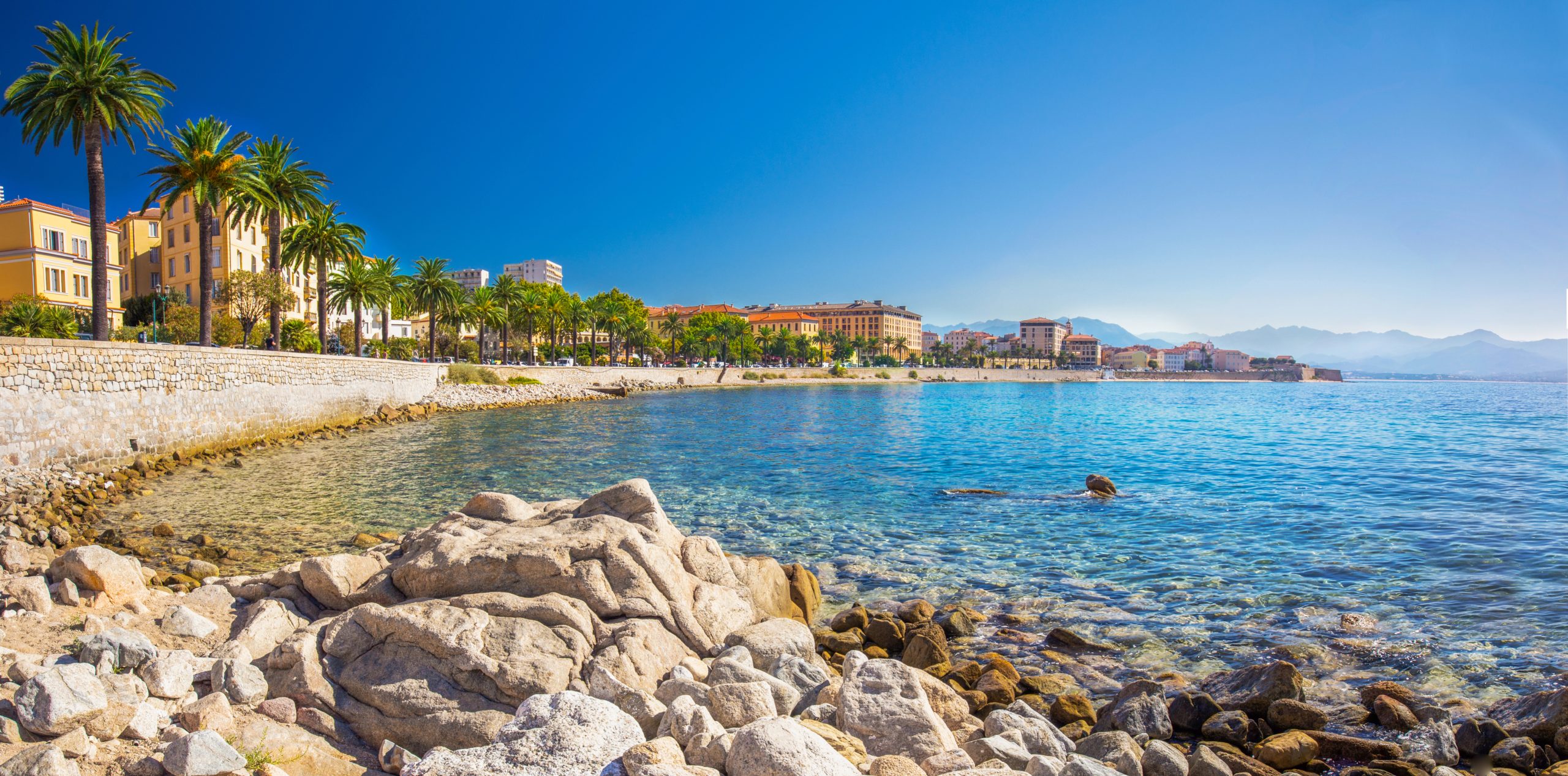
This Mediterranean island is what happens when you combine Italian passion, French sophistication, and landscapes that belong in a fantasy novel.
Most travelers planning a trip to France never consider Corsica. It’s not on the classic Paris-Provence-Riviera circuit. It requires a flight or long ferry ride. And frankly, many people don’t even realize it’s part of France.
But Corsica — l’Île de Beauté (the Island of Beauty) as the French call it — is unlike anywhere else in France or the Mediterranean. This is an island where mountains rise directly from turquoise seas, where villages cling to clifftops 1,000 meters above the water, where beaches rival the Caribbean, and where the culture is fiercely independent, proudly distinct from mainland France.
Napoleon was born here. The island has its own language. Locals will tell you they’re Corsican first, French second. And the landscapes — dramatic granite peaks, hidden coves, ancient forests, and coastal roads that make the Amalfi Coast look tame — are simply extraordinary.
Here’s why Corsica deserves a spot on your bucket list, and why it might just become your favorite place in the Mediterranean.
🏔️ Mountains Meet Mediterranean
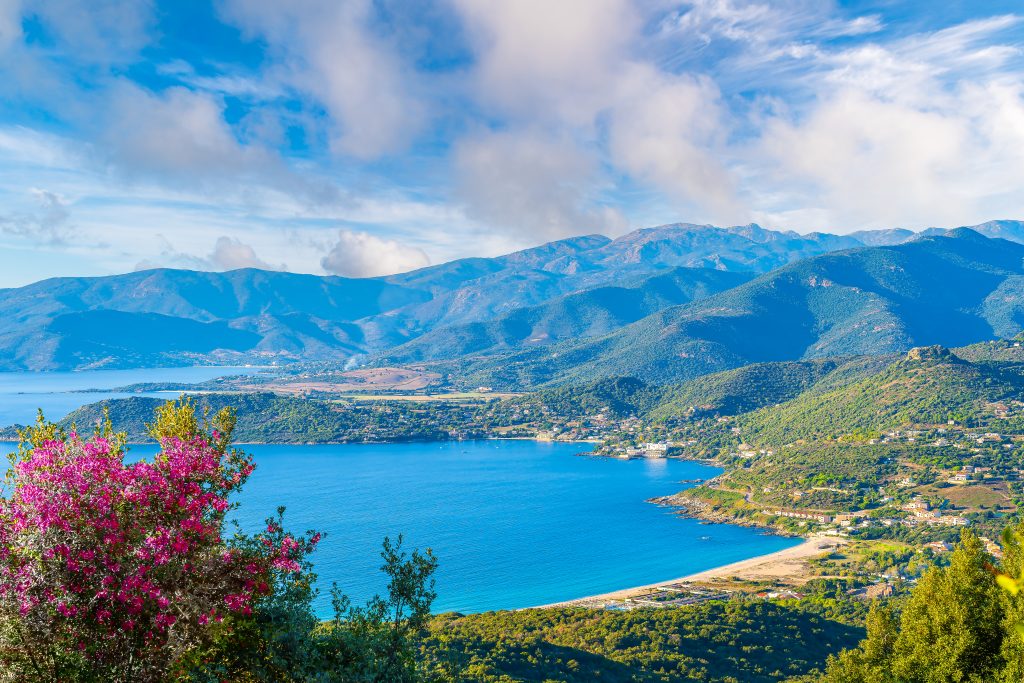
Corsica is fundamentally a mountain range rising from the sea. The island’s spine reaches over 2,700 meters, with 120 peaks above 2,000 meters. This creates landscapes you won’t find anywhere else in the Mediterranean — you can literally ski in the morning and swim in the afternoon (in spring).
The GR20 hiking trail is Europe’s toughest long-distance trek — 180 km of rugged mountain terrain that takes 15 days to complete. But you don’t need to be an extreme hiker to experience Corsica’s mountains. Countless day hikes lead to mountain lakes, waterfalls, and viewpoints with the sea visible in the distance.
The mountains also create Corsica’s dramatic microclimates. The west coast is wild and windswept. The east coast is flatter and more developed. The interior is alpine with pine forests and rushing rivers. And the south has the most Mediterranean feel with white cliffs and turquoise bays.
This diversity means you can experience multiple landscapes in a single day — mountain villages in the morning, coastal swimming in the afternoon, and sunset over dramatic cliffs.
🏖️ Beaches That Rival the Caribbean
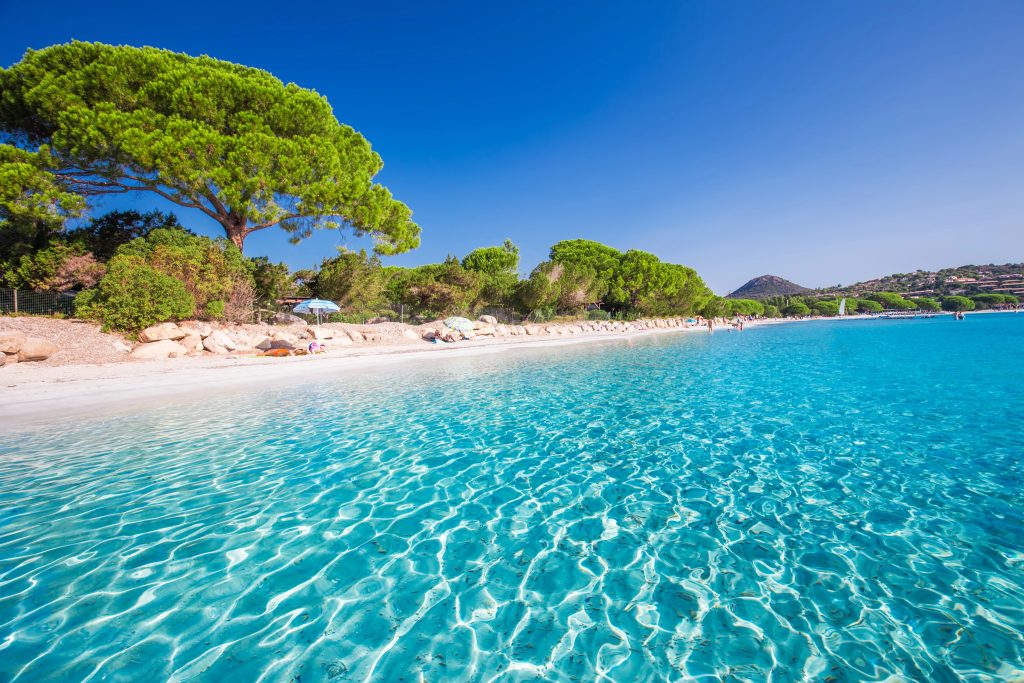
Corsica has some of the Mediterranean’s most beautiful beaches — white sand, turquoise water, and dramatic settings that make the French Riviera look ordinary.
Palombaggia near Porto-Vecchio is Corsica’s most famous beach — a long crescent of white sand with shallow turquoise water, backed by umbrella pines and red rocks. The water clarity is extraordinary, and the setting is postcard-perfect.
Santa Giulia is a sheltered bay with calm, shallow water perfect for families. The beach curves into a perfect arc with views across to the mountains.
Saleccia on the north coast is accessible only by boat or 4WD track — 1 kilometer of pristine white sand with turquoise water and zero development. This is what beaches looked like before tourism.
Rondinara is a nearly perfect circular bay with white sand and water that shifts from turquoise to deep blue. The symmetry is almost unnatural.
Calanques de Piana on the west coast aren’t beaches but dramatic red granite cliffs plunging into deep blue water. The rock formations — sculpted by wind and waves into fantastic shapes — are UNESCO-listed and absolutely spectacular.
The best part? Even famous Corsican beaches are less crowded than mainland French beaches. And if you’re willing to hike or take a boat, you can find completely deserted coves.
🏘️ Villages That Defy Gravity
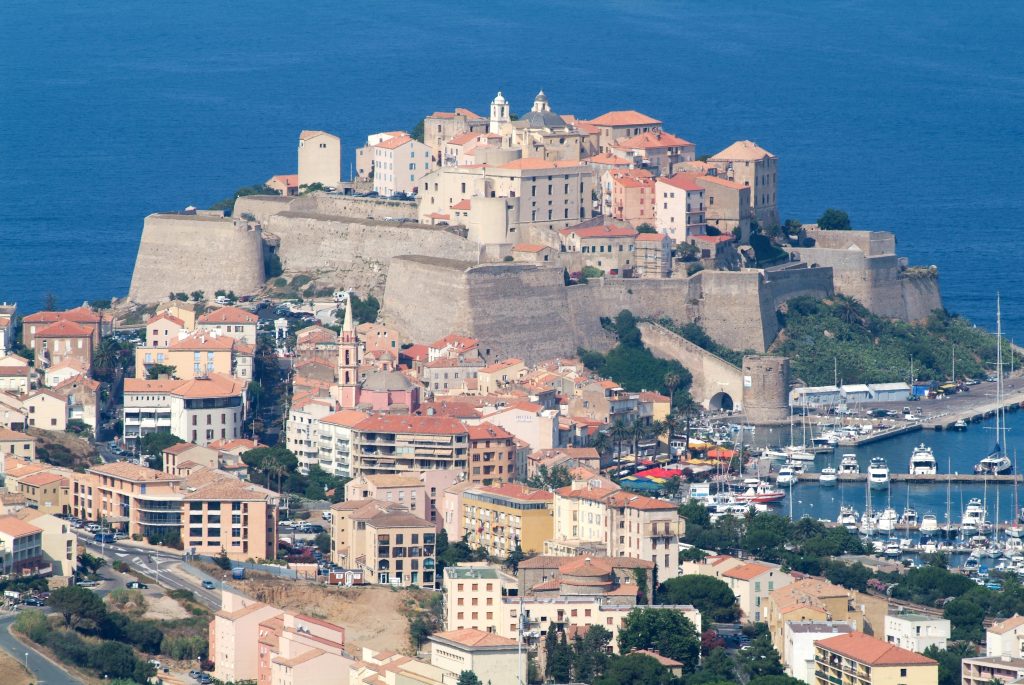
Corsican villages are built in impossible places — perched on clifftops, clinging to mountainsides, or stacked vertically up steep slopes. This wasn’t for the views (though those are spectacular) — it was for defense against centuries of invasions.
Bonifacio sits on white limestone cliffs 70 meters above the sea at Corsica’s southern tip. The old town’s buildings literally hang over the cliff edge, and the views across to Sardinia (just 12 km away) are breathtaking. Walk the clifftop path, explore the medieval citadel, and take a boat tour to see the cliffs from below.
Corte in the island’s mountainous interior was Corsica’s historic capital and remains its spiritual heart. The town climbs a rocky outcrop crowned by a dramatic citadel, surrounded by mountains. This is where Corsican independence was declared in the 18th century, and the town still feels proudly Corsican.
Sant’Antonino is one of France’s oldest villages — a circular medieval village perched on a rocky peak 500 meters above the coast. The village is car-free with narrow stone lanes, vaulted passages, and panoramic views. It feels like stepping back 800 years.
Piana overlooks the famous Calanques with red granite cliffs dropping to the sea. The village itself is charming, but the real draw is the location and the dramatic coastal road leading to it.
Pigna is a tiny artisan village in the Balagne region where craftspeople make traditional instruments, pottery, and other crafts. The village has been revived as a center for Corsican culture and music.
🍽️ Food That Blends French and Italian
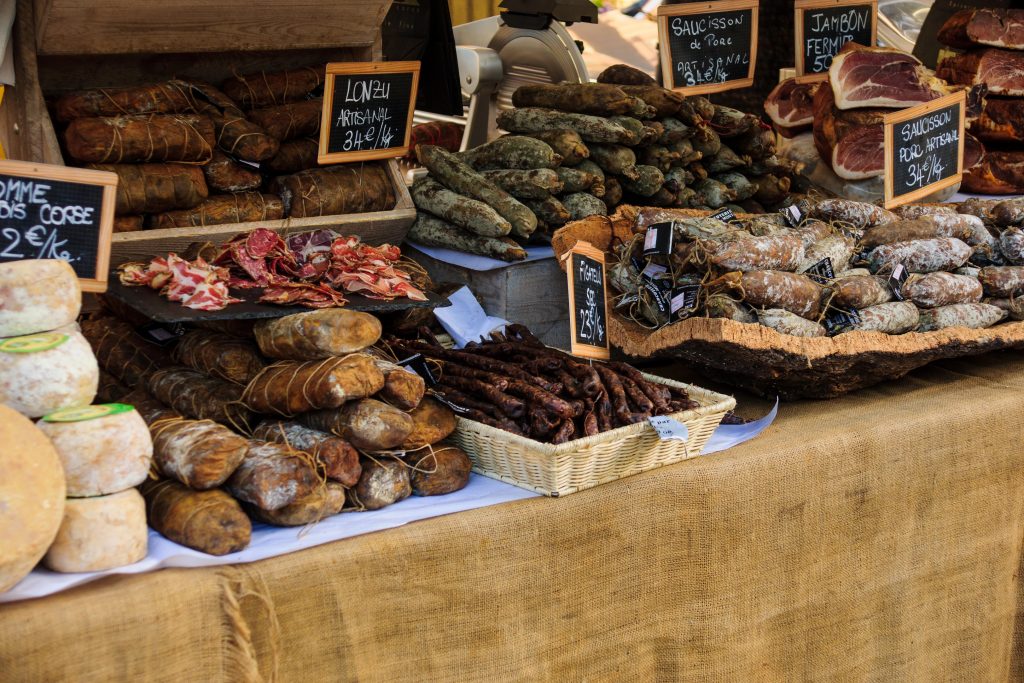
Corsican cuisine reflects the island’s position between France and Italy, with strong Italian influences but distinctly Corsican character. The food is hearty, rustic, and deeply connected to the island’s terroir.
Charcuterie is Corsica’s pride — coppa (cured pork shoulder), lonzu (cured pork loin), prisuttu (prosciutto), and figatellu (liver sausage). Pigs roam semi-wild in the mountains, eating chestnuts and acorns, giving the meat unique flavor.
Brocciu is fresh sheep or goat cheese used in countless dishes — cannelloni au brocciu, fiadone (cheesecake), beignets au brocciu (fritters). It’s Corsica’s only AOC cheese and appears at every meal.
Seafood is exceptional — grilled simply with herbs, in bouillabaisse Corse (fish soup), or as langouste (spiny lobster) in Porto or Saint-Florent.
Aziminu is Corsican fish soup similar to bouillabaisse but with local fish and saffron.
Veau aux olives (veal with olives) is a classic Corsican stew, slow-cooked until tender.
Chestnuts were historically Corsica’s staple food. Today they appear in pulenta (chestnut polenta), castagnacci (chestnut cake), chestnut flour, and chestnut beer.
Corsican wines are excellent and underrated — try reds from Patrimonio, whites from Ajaccio, or the unique Muscat du Cap Corse.
Cédratine is liqueur made from cédrat (Corsican citron), and myrtle liqueur is made from wild myrtle berries.
🚗 The Most Dramatic Coastal Roads
Corsica’s coastal roads are engineering marvels and white-knuckle experiences — narrow, winding, and spectacularly scenic.
Route des Calanques (D81) between Piana and Porto is one of Europe’s most dramatic coastal drives. The road carves through red granite cliffs with sheer drops to the sea, hairpin turns, and rock formations that look sculpted by giants. Drive slowly, stop at viewpoints, and try not to stare at the scenery while driving.
Cap Corse is a 100 km loop around Corsica’s northern peninsula — a wild, mountainous finger pointing toward Italy. The road hugs the coast, passing tiny fishing villages, Genoese towers, and dramatic viewpoints. The west coast is particularly spectacular with cliffs plunging into the sea.
Calanques de Piana to Porto offers views of the UNESCO-listed red granite formations from above and below. Stop at viewpoints, hike short trails, and photograph the surreal rock shapes.
Bonifacio to Porto-Vecchio follows the southern coast past some of Corsica’s best beaches with views across to Sardinia.
Note: Corsican roads are slow — narrow, winding, and often climbing mountains. What looks like 50 km on a map can take 1.5 hours. Plan accordingly and enjoy the journey.
🥾 Hiking Paradise
Beyond the famous GR20, Corsica has hundreds of hiking trails for all levels.
Sentier des Douaniers (Customs Officers’ Path) follows the coast around Cap Corse with spectacular sea views and passes through tiny villages.
Cascades des Anglais near Vizzavona is an easy hike to beautiful waterfalls and natural pools perfect for swimming.
Lac de Melo and Lac de Capitello in the Restonica Valley are glacial lakes reached by moderate hikes with stunning mountain scenery.
Aiguilles de Bavella offers dramatic granite spires and multiple hiking options from easy walks to challenging scrambles.
Mare a Mare trails cross the island from coast to coast, taking 5–7 days and passing through mountain villages.
🏛️ History and Culture
Corsica’s strategic Mediterranean position meant centuries of invasions, occupations, and conflicts. The island was ruled by Pisans, Genoese, briefly independent, then sold to France in 1769 (the year before Napoleon was born in Ajaccio).
Genoese towers dot the coastline — 67 defensive towers built in the 16th century to watch for pirates. Many are accessible and offer panoramic views.
Prehistoric sites include Filitosa with 8,000-year-old menhir statues and Cauria with Bronze Age stone circles.
Ajaccio is Napoleon’s birthplace. Visit his childhood home (now a museum) and see statues and streets named for the island’s most famous son.
Corsican language (Corsu) is closer to Italian than French and still widely spoken. Signs are often in both French and Corsican.
Polyphonic singing is Corsica’s traditional music — haunting harmonies sung a cappella. Attend a concert if possible.
🗺️ Planning Your Trip
How long: Minimum 7 days; ideally 10–14 days to explore thoroughly without rushing.
When to go: May–June or September–October for warm weather, fewer crowds, and lower prices. July–August are hot, crowded, and expensive. April and November are shoulder season with variable weather.
Getting there: Fly to Ajaccio, Bastia, Calvi, or Figari from Paris, Nice, Marseille, or other European cities. Or take overnight ferries from Nice, Toulon, or Marseille (romantic but time-consuming).
Getting around: Rent a car — essential for exploring. Roads are slow and winding. Book accommodations with parking.
Where to stay: Base in 2–3 locations to minimize driving. North (Calvi, Saint-Florent), center (Corte), and south (Porto-Vecchio, Bonifacio) cover the island well.
Budget: Corsica is expensive in summer (July–August). Accommodations, restaurants, and ferries cost 30–50% more than mainland France. Visit shoulder season for better value.
The Bottom Line
Corsica is what happens when you take the best of France and Italy, add dramatic mountain landscapes, surround it with turquoise Mediterranean water, and let it develop its own fierce, independent culture for centuries.
This isn’t a place for quick visits or cruise ship stops. Corsica rewards time, exploration, and willingness to embrace its slower pace and winding roads. But if you give it that time, Corsica delivers experiences you won’t find anywhere else — beaches that rival tropical paradises, mountains that challenge serious hikers, villages that defy gravity, food that celebrates local terroir, and a culture that’s proudly, defiantly unique.
Ready to discover the Mediterranean’s most beautiful secret? Corsica is waiting — and it’s more spectacular than you imagine.
