
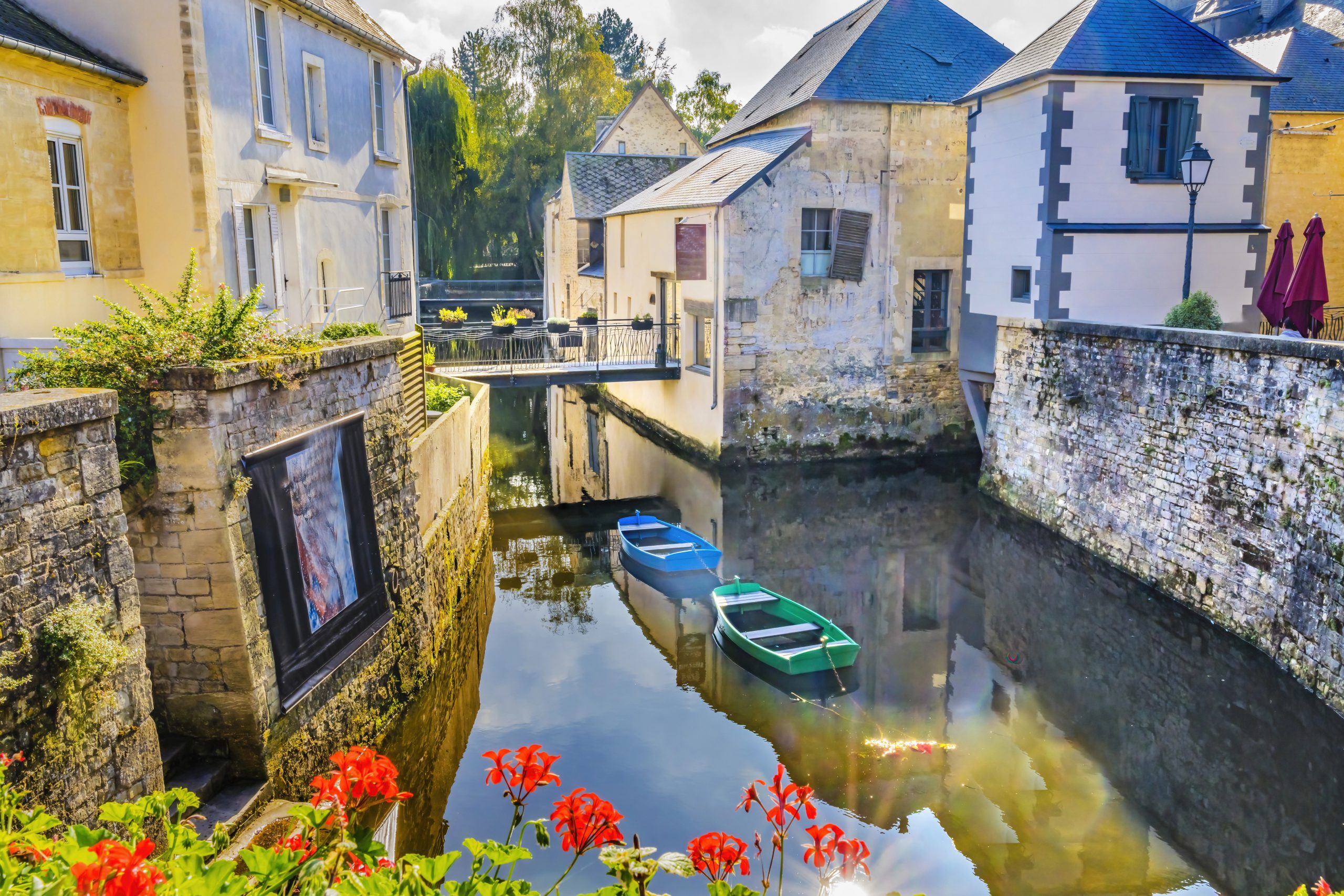
Where Half-Timbered Houses, Tides, and Quiet Streets Still Define Daily Life
Normandy is often associated with dramatic cliffs, D-Day beaches, and seaside towns—but inland and along the coast, you’ll also find villages where time seems to move differently.
These are places where:
- bakeries still open at dawn for regulars
- church bells mark the rhythm of the day
- half-timbered houses lean slightly with age
- and tourism never fully replaced local life
Here are five Normandy villages that feel genuinely “frozen in time.”
🌊 1. Beuvron-en-Auge — The Postcard Village
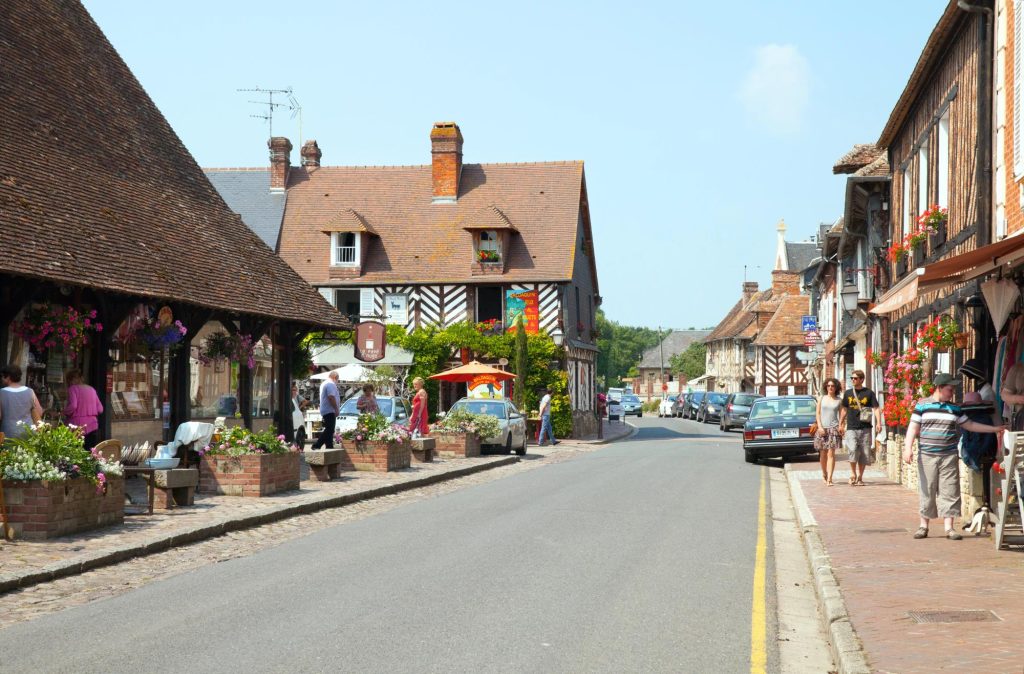
Beuvron-en-Auge
Beuvron-en-Auge is one of the most beautiful villages in Normandy, and part of the famous Cider Route.
Why it feels frozen in time:
- perfectly preserved half-timbered houses
- flower-filled streets and squares
- traditional Norman architecture everywhere
- very small population and slow pace
What you notice immediately:
Nothing feels modern or rushed—just calm village life.
🏡 2. Lyons-la-Forêt — A Forest Village from Another Century
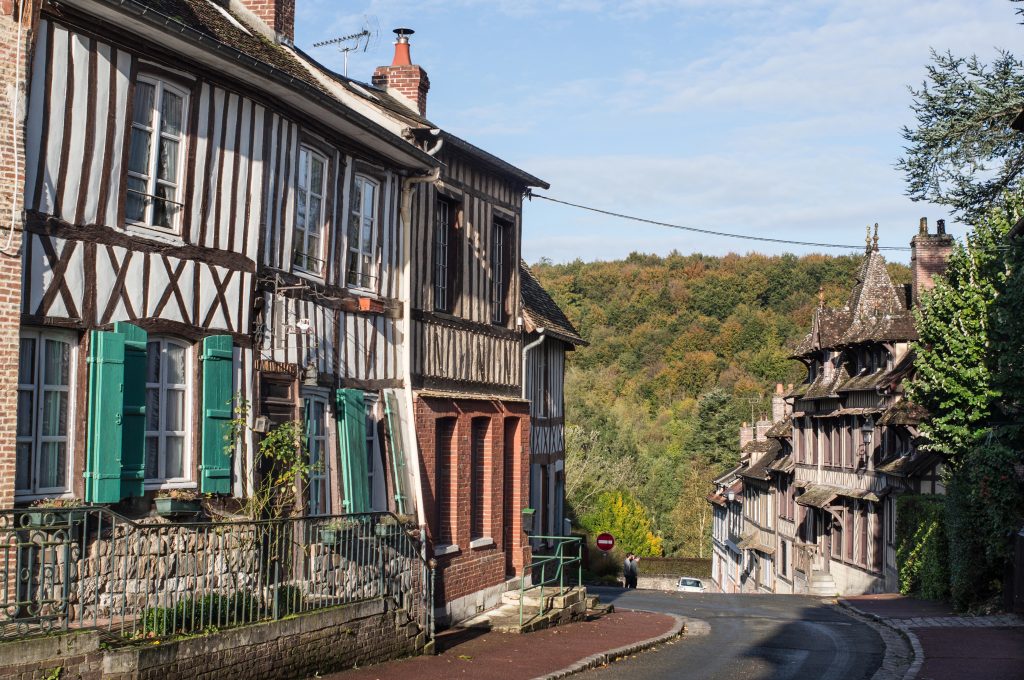
Lyons-la-Forêt
Hidden on the edge of one of France’s most beautiful beech forests, Lyons-la-Forêt feels like a storybook village.
Highlights:
- surrounded by dense forest
- 17th–18th century timber houses
- elegant central square
- historic covered market hall
It’s the kind of place where mist in the morning feels completely natural.
🌿 3. Barfleur — A Granite Fishing Village
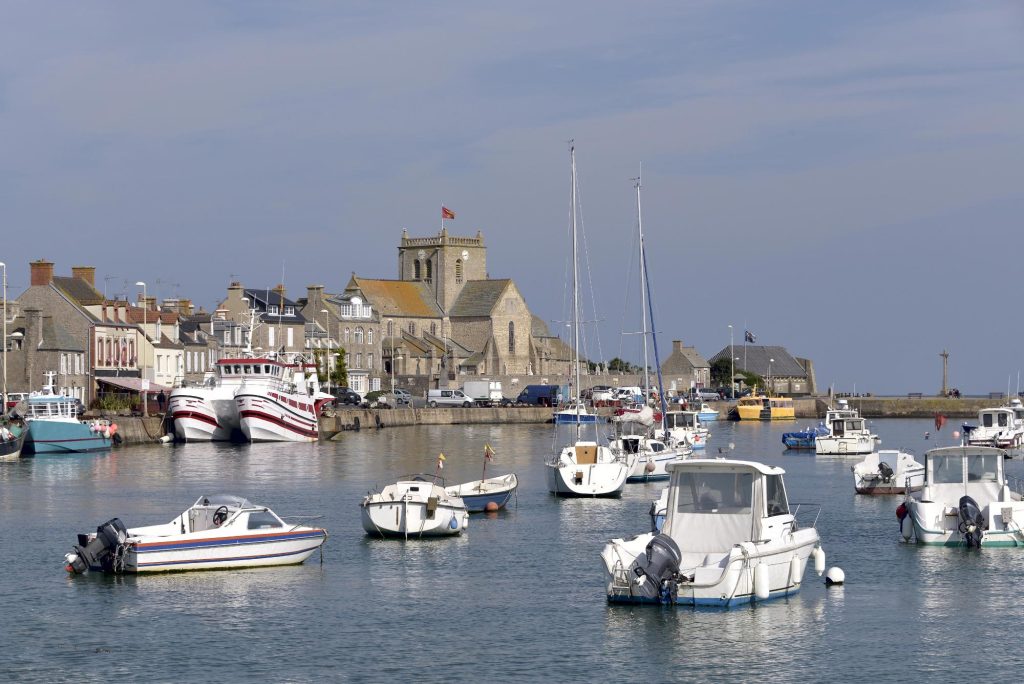
Barfleur
On Normandy’s northeastern coast, Barfleur is a small working fishing village built from grey granite.
Why it feels timeless:
- unchanged fishing port atmosphere
- granite houses that resist trends
- tides shaping daily rhythm
- minimal commercial tourism
Best moment:
Early morning when fishing boats return to port.
🌾 4. Saint-Céneri-le-Gérei — The Artistic Hidden Gem
Saint-Céneri-le-Gérei
Tucked into a bend of the River Sarthe, this village has long attracted painters and artists.
Why it feels frozen in time:
- stone church overlooking the river
- ancient stone bridge
- ivy-covered houses
- peaceful, almost silent surroundings
It still feels like an artist’s retreat from another era.
🌊 5. Veules-les-Roses — Where Time Meets the Sea
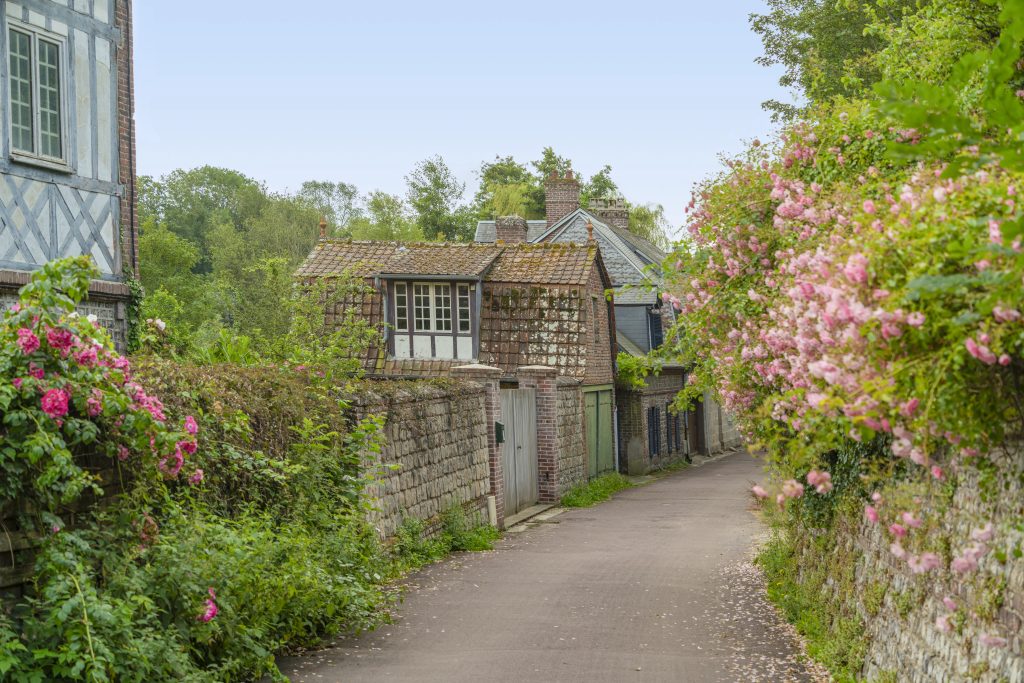
Veules-les-Roses
This tiny village is where France’s shortest river meets the English Channel.
What makes it unforgettable:
- flower-covered cottages
- watermills and gardens
- a river that flows directly into the sea
- quiet coastal paths
It feels like two worlds—river village and seaside town—merged into one.
🧭 Why These Villages Feel “Frozen in Time”
What they all share:
🏡 Architecture preserved for centuries
Half-timbered or granite homes that haven’t changed much in appearance.
🌿 Slow daily rhythm
Life still revolves around markets, bakeries, and local routines.
🚫 Limited mass tourism
No oversized attractions or heavy commercialization.
🌊 Natural surroundings
Rivers, forests, or coastal landscapes define the village identity.
🧭 Best Way to Visit
- 🚗 Explore by car (public transport is limited)
- 🕰️ Go early morning or late afternoon for atmosphere
- ☕ Stop at small cafés instead of rushing through
- 🌦️ Embrace Normandy’s changing weather—it adds character
- 📍 Combine coastal + inland villages in one route
✨ Final Thought
Normandy’s frozen-in-time villages aren’t about perfection or preservation for tourists.
They’re alive—just at a slower pace.
Beuvron-en-Auge feels like a painted postcard. Lyons-la-Forêt feels like a forest memory. Barfleur feels unchanged by centuries. Saint-Céneri-le-Gérei feels like an artist’s dream. And Veules-les-Roses feels like time gently flowing toward the sea.
Together, they show a quieter side of Normandy—where history isn’t displayed in museums, but still lived every day. 🏡🌿🇫🇷✨
