
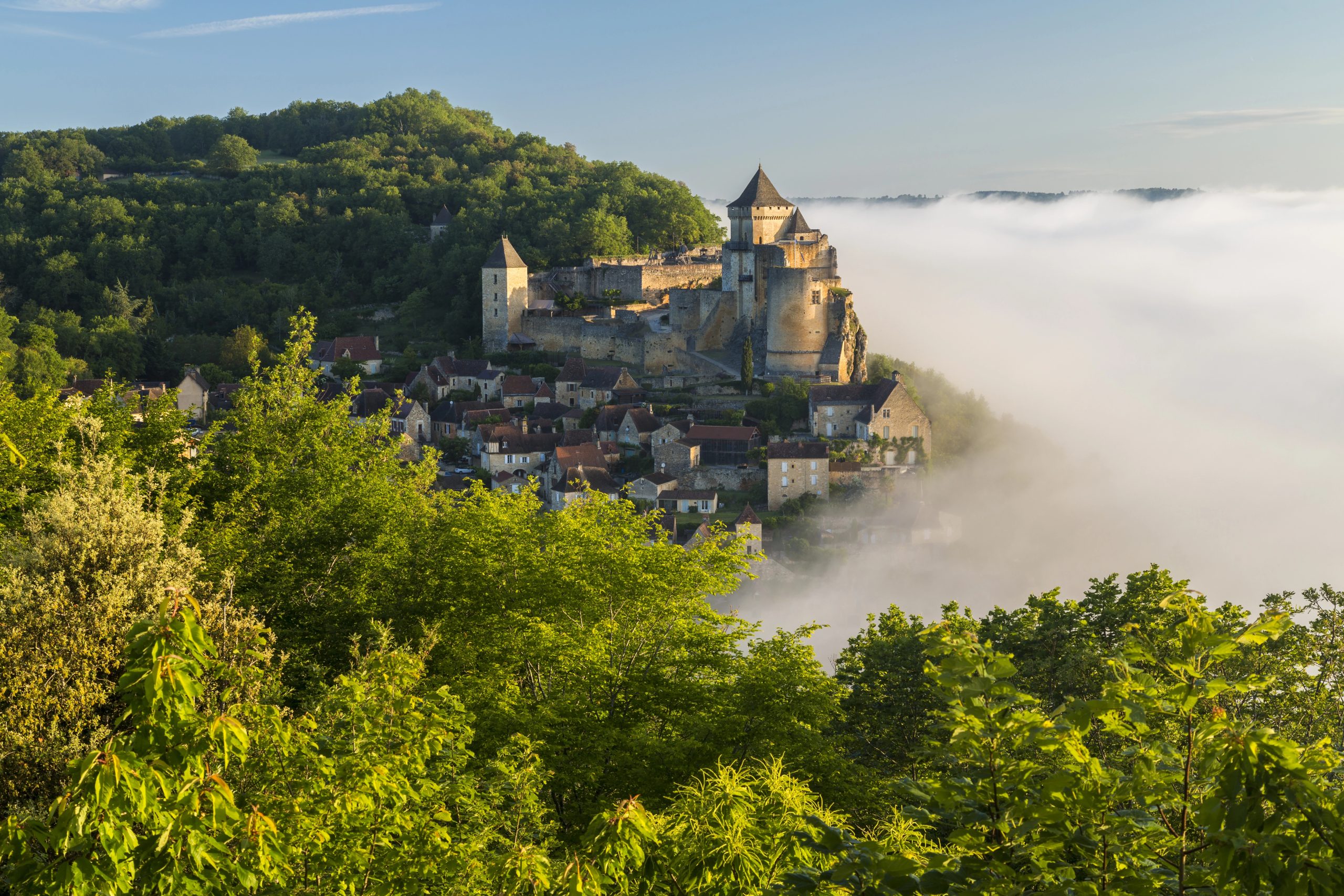
This is the France that exists in your imagination — medieval castles on clifftops, prehistoric caves, and food so good it feels unfair to the rest of the country.
The Dordogne doesn’t make it onto most first-time visitors’ France itineraries. It’s not Paris, not the Riviera, not the Loire Valley with its famous châteaux.
But ask the French where they’d choose to live if money were no object, and many will say the Dordogne. Ask food lovers where France’s greatest cuisine comes from, and the Dordogne is always in the conversation. Ask historians where to see the most concentrated collection of medieval architecture, and the answer is the Dordogne Valley.
This region in southwestern France — officially called the Périgord — offers a uniquely rich combination: over 1,000 castles, prehistoric cave art dating back 17,000 years, medieval villages that look frozen in time, and a culinary tradition based on truffles, foie gras, duck, walnuts, and wine that makes every meal memorable.
Here’s why the Dordogne deserves a place on your France itinerary — and why it might become your favorite region in the country.
🏰 The Castles — A Medieval Landscape
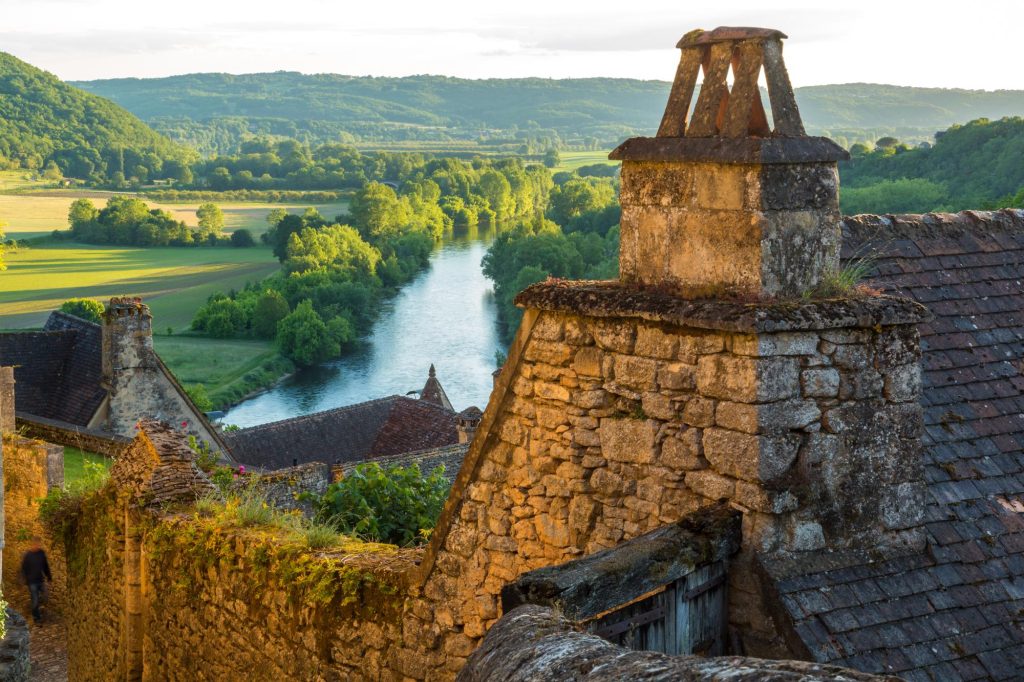
The Dordogne has the highest concentration of castles in France — over 1,000 châteaux, fortresses, and manor houses scattered across the landscape. Some are grand and restored, others are romantic ruins, but all tell stories of medieval power struggles and centuries of history.
Château de Beynac perches on a cliff 150 meters above the Dordogne River — the region’s most dramatic castle. This 12th-century fortress was a French stronghold during the Hundred Years’ War, facing off against the English-held Château de Castelnaud across the river. The interior is austere and authentic with stone walls and medieval weapons, but the real draw is the panoramic view from the ramparts over the river valley, villages, and rival castles.
Château de Castelnaud, directly across the river, was the English stronghold and now houses an excellent Museum of Medieval Warfare with trebuchets, crossbows, armor, and working siege engines. The museum brings medieval warfare to life with demonstrations and reconstructions that kids love and adults appreciate.
Château des Milandes offers something different — this Renaissance château was home to Josephine Baker, the American-born French entertainer who became a Resistance hero during WWII and adopted 12 children from different countries. The beautifully furnished château tells Baker’s inspiring story, and the gardens host falconry demonstrations.
Château de Commarque is a romantic ruin in a wild valley — crumbling towers, overgrown walls, and a setting that feels lost in time. The castle is being slowly restored, and nearby are prehistoric caves and a troglodyte fortress carved into the cliff.
🎨 The Caves — 17,000 Years of Art
The Dordogne is home to the highest concentration of prehistoric sites in Europe. The Vézère Valley alone has 15 UNESCO World Heritage prehistoric sites, including some of the world’s most important cave art.
Lascaux IV is a complete replica of the famous Lascaux caves, which contain 17,000-year-old paintings of horses, bulls, deer, and mysterious symbols. The original caves closed in 1963 to preserve the paintings, but Lascaux IV uses cutting-edge technology to recreate every detail. Walking through feels like stepping back 17,000 years. The accompanying museum explains Paleolithic life, art techniques, and the caves’ discovery by four teenagers in 1940.
Font-de-Gaume is one of the last caves with original prehistoric paintings still open to the public. The 14,000-year-old polychrome paintings of bison, reindeer, and horses are authentic and deeply moving. Only 78 visitors per day are allowed, and tickets sell out weeks or months in advance — book as early as possible.
Grotte de Rouffignac offers a different experience — you ride an electric train 1 km underground to see 13,000-year-old engravings and paintings of mammoths, bison, and horses. The cave has over 150 mammoth drawings, the largest concentration anywhere.
🏘️ The Villages — Medieval Perfection
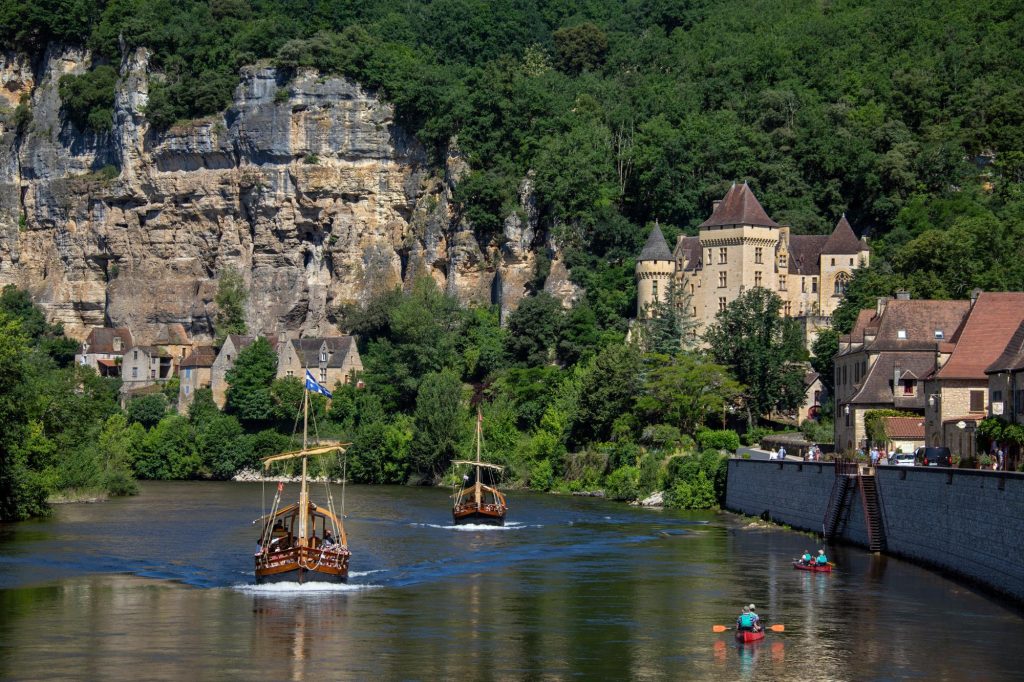
The Dordogne has some of France’s most beautiful villages, many designated as “Plus Beaux Villages de France” (Most Beautiful Villages of France).
Sarlat-la-Canéda is the Dordogne’s capital of gastronomy and medieval architecture. The old town is a maze of honey-colored stone buildings, narrow lanes, and hidden courtyards — one of France’s best-preserved medieval centers. The Saturday market is legendary, with stalls overflowing with foie gras, truffles, walnuts, cheese, and every Périgord specialty.
La Roque-Gageac is a village built into a cliff face along the Dordogne River. Houses are stacked vertically against the rock, with tropical gardens (the cliff creates a microclimate) and the river flowing past. Take a traditional gabarre boat ride on the river for the best views of the village and surrounding castles.
Beynac-et-Cazenac is a vertical village climbing the hillside to the castle at the top. Stone houses with steep roofs cascade down the cliff, connected by narrow lanes and staircases. The village is car-free in the center, making it perfect for wandering.
Domme is a bastide town (planned medieval town) perched on a cliff with panoramic views over the Dordogne Valley. The town has a perfect grid layout, covered market hall, and ramparts you can walk. Beneath the market hall are caves where villagers hid during wars — you can tour them and see stalactites and stalagmites.
Monpazier is the best-preserved bastide town in France — a perfectly intact 13th-century planned town with a central square, arcaded market hall, and grid street layout. Walking through Monpazier feels like stepping into the Middle Ages.
🍽️ The Food — Périgord Cuisine
The Dordogne is one of France’s great gastronomic regions, with cuisine based on duck, goose, truffles, walnuts, and rich, earthy flavors.
Foie gras (duck or goose liver) is a Périgord specialty, served fresh, as terrine, or pan-seared. Confit de canard (duck leg slow-cooked in its own fat) is a regional classic. Magret de canard (duck breast) is usually served medium-rare with fruit sauce.
Black Périgord truffles (winter) are among the world’s most prized, found in omelets, sauces, and shaved over dishes. Pommes sarladaises (potatoes cooked in duck fat with garlic and parsley) are dangerously addictive.
Cèpes (porcini mushrooms) are abundant in fall, served in omelets, salads, and sauces. Walnut products — walnut oil, walnut cake (gâteau aux noix), walnuts in salads — are everywhere, as the Dordogne is France’s walnut capital.
Cabécou is a small round goat cheese, often served warm on salad. Bergerac wines (reds, whites, sweet Monbazillac) pair perfectly with the rich cuisine.
Visit Sarlat’s Saturday market to buy foie gras, truffles, and local products directly from producers. Many duck and goose farms offer tours and tastings. Winter truffle markets (December–February) in Sarlat and Périgueux are unforgettable experiences.
🚣 Beyond Castles and Caves
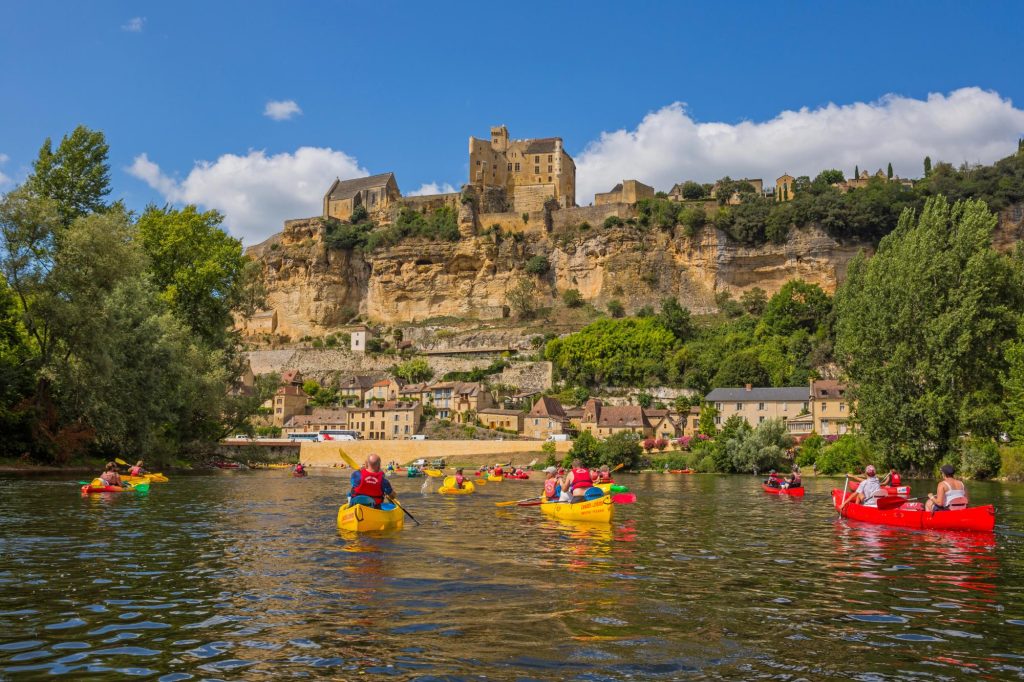
Canoe the Dordogne River past castles, cliffs, and villages. Half-day trips from Vitrac to Beynac are popular and suitable for beginners.
Hot air balloon at dawn for magical views of castles, river, and countryside from above.
Cycle through valleys and villages on excellent cycling routes. Rent bikes or join guided tours.
Visit markets — every town has a weekly market. Sarlat (Saturday), Domme (Thursday), and Monpazier (Thursday) are the best.
Explore the Gardens of Marqueyssac — suspended gardens with 150,000 hand-pruned boxwoods overlooking the Dordogne Valley. The sunset views are spectacular.
🗺️ Planning Your Visit
How long: Minimum 3–4 days to see highlights; ideally 5–7 days to explore thoroughly.
When to go: May–June or September–October offer good weather, fewer crowds, and fall mushrooms. July–August are warm and crowded. November–February is truffle season but many sites have reduced hours.
Getting there: A car is essential for exploring. Rent in Bordeaux (2 hours), Toulouse (2.5 hours), or Bergerac. Train service to Sarlat is limited — better to train to Bordeaux or Périgueux and rent a car.
Where to stay: Sarlat is the best base with central location, excellent restaurants, and markets. Beynac or La Roque-Gageac are smaller and more atmospheric with river views. Rent a countryside farmhouse or gîte for an authentic experience.
The Bottom Line
The Dordogne offers what many travelers seek in France but struggle to find: authentic medieval villages, world-class historical sites, stunning landscapes, and extraordinary food — all without the crowds and commercialization of more famous regions.
This is France at its most satisfying — where history is tangible, beauty is abundant, and every meal reminds you why French cuisine has such a reputation. The castles tell stories of medieval power. The caves reveal humanity’s earliest art. The villages preserve centuries of architecture. And the food celebrates the region’s rich terroir.
Ready to discover France’s most underrated region? The Dordogne is waiting — with over 1,000 castles, 17,000-year-old art, and the best duck confit you’ll ever taste.
