
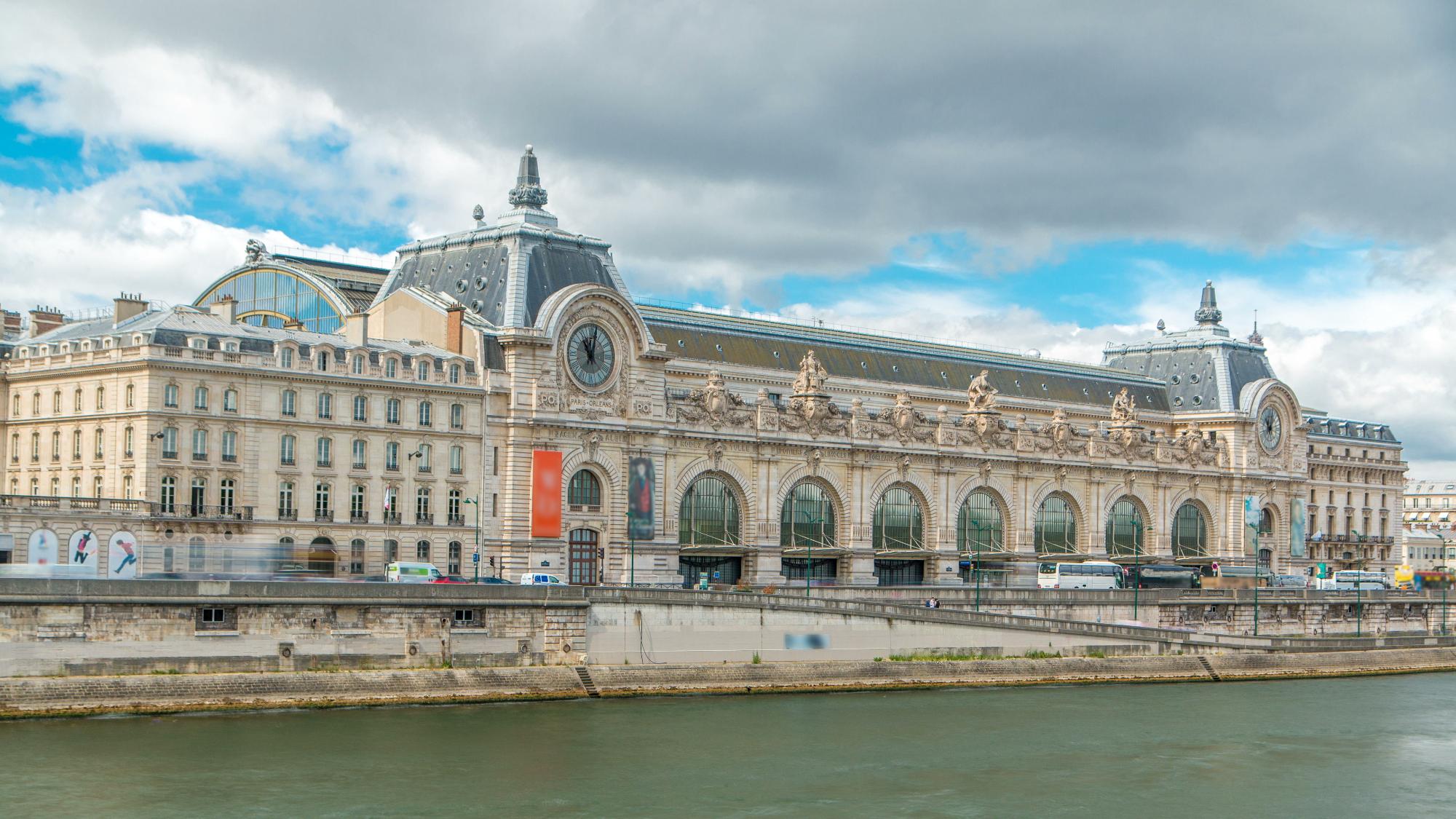
Paris’s most breathtaking museum isn’t where you think it is.
Forget everything you thought you knew about art museums. In Paris, there’s one place that combines history, architecture, and world-famous masterpieces under one jaw-dropping glass roof—and it used to be a train station.
Welcome to the Musée d’Orsay, the once-abandoned Gare d’Orsay turned into one of the most beloved museums in the world. It’s where 19th-century art meets Instagram-worthy architecture, and trust us—it will blow you away.
🏛️ From Train Tracks to Timeless Art
When you step into the Musée d’Orsay, you’re not just entering a museum—you’re stepping into a stunning piece of Parisian history that almost disappeared.
Originally built for the 1900 Exposition Universelle (World’s Fair), the Gare d’Orsay was a masterpiece of innovation. It was the first train station in the world built for electric trains, a revolutionary idea at the time. Unlike the gritty, smoke-filled stations of the past, this one was elegant and futuristic. Designed in the Beaux-Arts style, it featured intricate stone façades, iron detailing, and massive glass ceilings that flooded the space with natural light. It was part train terminal, part palace.
But as the decades passed, the station couldn’t keep up with modern rail demands. By the 1930s, its platforms were too short for the newer, longer trains, and it was eventually closed to long-distance traffic. For years, it sat in a kind of architectural limbo—used as a mailing center during WWII, then a film set, and finally abandoned. At one point, there were even plans to demolish it and replace it with a luxury hotel.
But in the late 1970s, a new idea emerged: what if this grand space could become a temple to art instead of industry? The French government approved a bold transformation project, and in 1986, the Musée d’Orsay officially opened its doors.
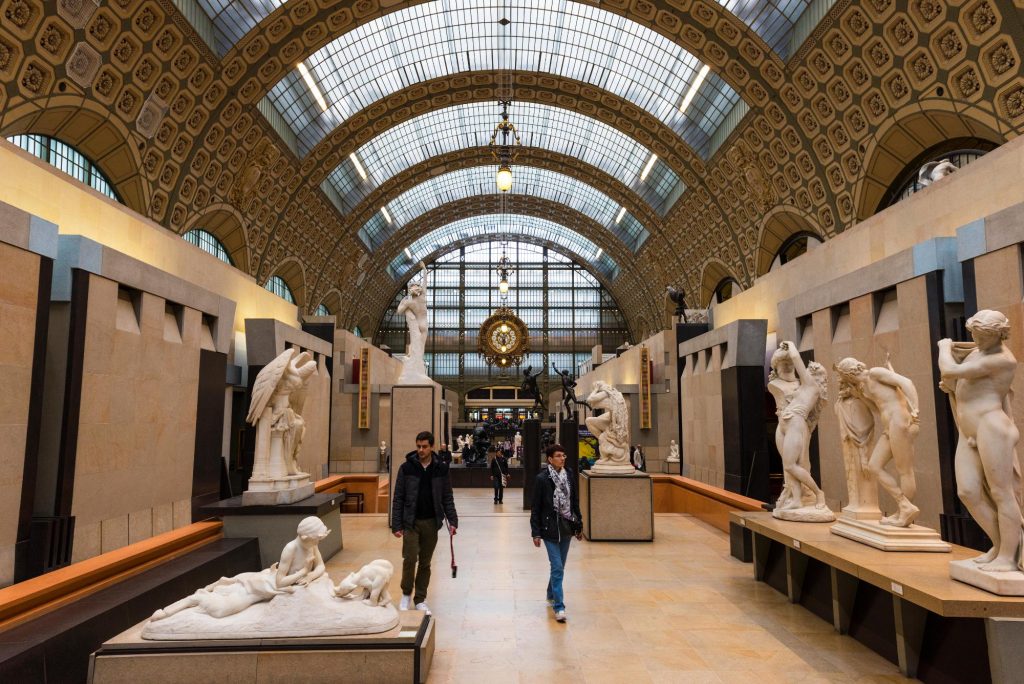
Rather than gut the interior, architects chose to honor the building’s original bones—its iron arches, glass vaults, and soaring 32-meter-high ceiling. They turned the old train platforms into exhibition spaces, filled with sculptures and natural light. The former arrival hall became the museum’s heart: a dramatic, cathedral-like space lined with marble statues and overlooked by balconies and staircases that echo the station’s past.
The result? A museum that feels both timeless and alive—where world-famous masterpieces by Van Gogh, Monet, Degas, Manet, and Gauguin hang on the walls of a structure built for movement, energy, and dreams.
🕰️ It’s not just a museum—it’s a story of rebirth, of finding new purpose in forgotten places.
🎨 What Makes Musée d’Orsay So Special?
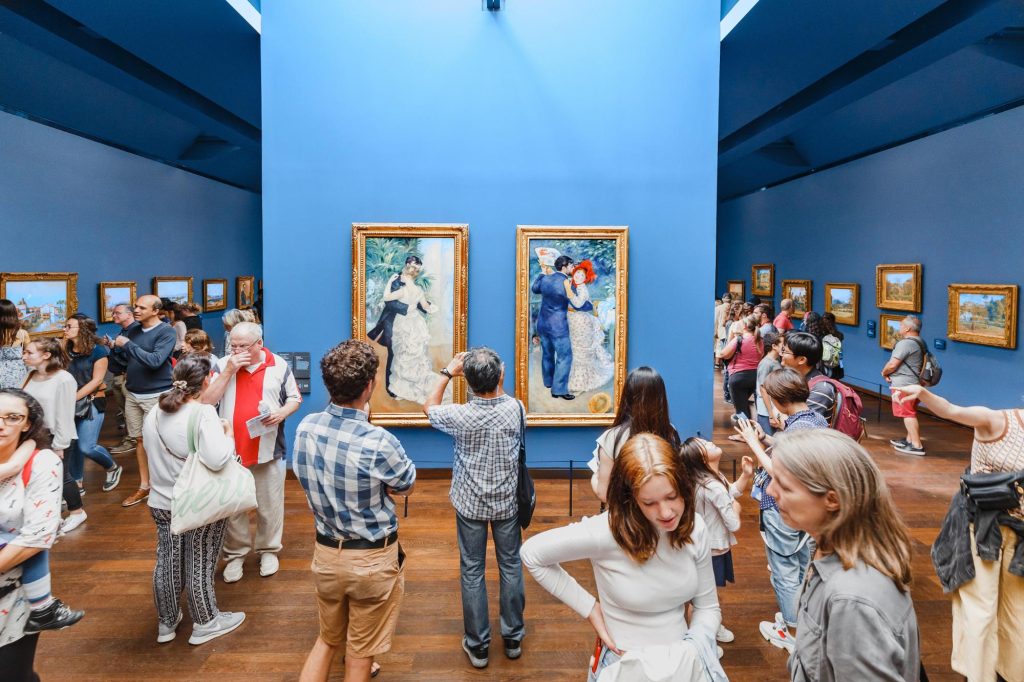
This isn’t your typical museum.
There are no endless white corridors that leave you wondering if you’ve missed something. Instead, the Musée d’Orsay is open, airy, and designed on a human scale—which makes it feel more like wandering through a story than walking through a gallery. It’s a place where art breathes, and where visitors don’t just look—they feel.
🖌️ Inside, you’ll come face to face with some of the most iconic works of 19th and early 20th-century art:
- Van Gogh, whose wild brushstrokes and tormented beauty seem even more alive in person. You’ll see masterpieces like Starry Night Over the Rhône, where the stars shimmer over deep blue water, and Self-Portrait, where he stares out at you with raw, electric intensity.
- Claude Monet, the master of light. From his ethereal Water Lilies to the glowing façade of Rouen Cathedral, you can almost feel the sunlight shift on the canvas.
- Edgar Degas, known for his intimate portrayals of ballet dancers. The Little Dancer of Fourteen Years—a bronze statue with a real fabric skirt—feels hauntingly lifelike, caught mid-movement and full of adolescent vulnerability.
- Plus timeless works by Renoir, Cézanne, Manet, Toulouse-Lautrec, and Gauguin—each capturing the vibrancy, rebellion, and creativity that defined this revolutionary period in art.
But it’s not just about paintings.
🗿 Sculpture Under Skylights
Walk into the museum’s central hall—once the arrival platform for trains—and you’ll find it transformed into a sunlit gallery of elegant marble and bronze sculptures. The natural light streaming through the arched glass ceiling brings these figures to life in a way that spotlights never could. They’re not roped off or hidden behind glass—you can walk among them, see their contours up close, and feel the weight of history in every chisel mark.
🛋️ A Journey Through Design: Art Nouveau Decor
Beyond paintings and statues, the museum also features an entire section dedicated to Art Nouveau—the decorative arts movement known for its curves, florals, and fluid, organic shapes. You’ll wander through rooms filled with ornate period furniture, intricate stained glass, ceramic pieces, and decorative objects that once filled Parisian homes during the Belle Époque. It’s like stepping into a perfectly preserved time capsule of turn-of-the-century elegance.
🕰️ The Giant Clock Room – A Paris View Like No Other
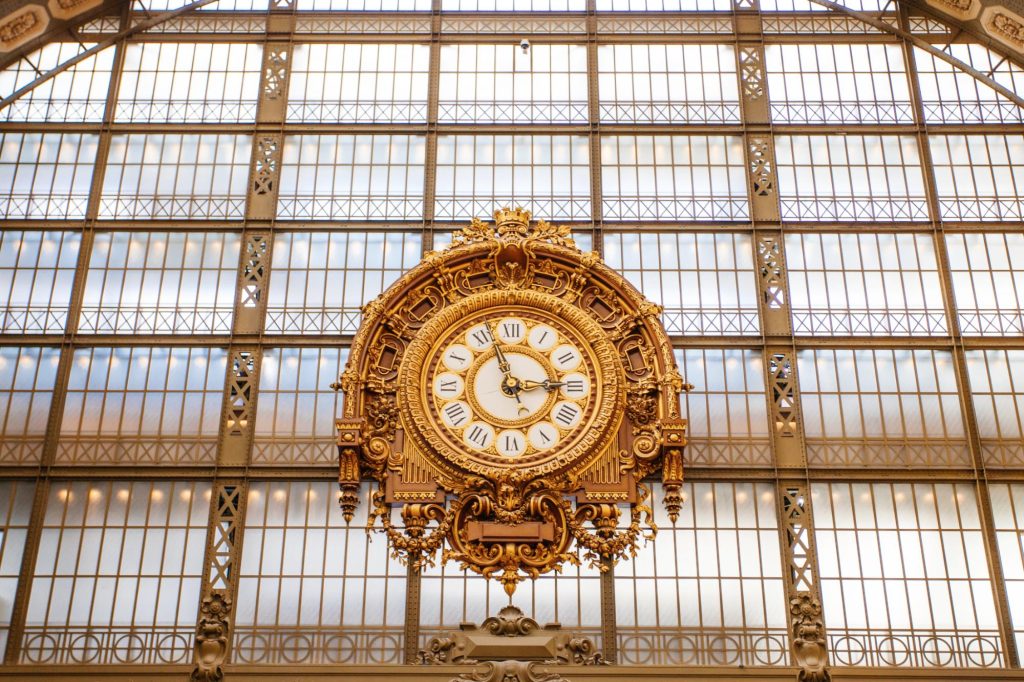
And then there’s the clock.
At the far end of the museum’s upper floor, you’ll discover a massive glass and iron clock face—a remnant of the building’s train station days. But now, instead of watching trains depart, it offers a magical view of Paris, framed through Roman numerals and golden light.
Visitors can stand inside the clock, silhouetted against the skyline, with the Seine and Sacré-Cœur in the distance. It’s one of the most Instagrammable spots in Paris—and one of the most quietly moving. You feel suspended in time, connected to the city in a way that no rooftop or monument quite captures.
📸 Pinterest Tip: Snap from behind someone standing in the clock to create a silhouette framed by Paris. Add overlay text like: “This Museum Clock Has the Best View in Paris” or “Step Into Art. Step Into Time.”
💡 Smart Tips for Visiting the Musée d’Orsay
Make the most of your visit with these insider tips—because this museum deserves more than a rushed walkthrough.
🎟️ 1. Buy Your Ticket in Advance
The Musée d’Orsay is one of Paris’s most beloved museums, and for good reason—it gets very popular, especially in high season (spring through fall). Avoid wasting time in long lines by booking your ticket online ahead of time. You can choose timed entry slots, which helps control crowds and makes for a smoother experience.
👉 Bonus: If you’re visiting the Louvre too, look for a combined museum pass or multi-day Paris museum card—it can save both money and hassle.
⏰ 2. Go Early or Late for the Best Experience
Want to wander the galleries without the noise of tour groups and selfie sticks?
- Go early: Arrive right at opening (usually 9:30 a.m.) to enjoy the quietest atmosphere.
- Go late: Friday nights often have extended hours, and the museum is beautifully lit with fewer crowds. It’s a whole different vibe.
Plus, the natural light inside the museum shifts throughout the day, especially in the upper galleries. Early morning and golden hour bring soft, glowing tones that enhance both the art and your photos.
📸 Pinterest Tip: Late afternoons create dreamy light through the main glass ceiling—perfect for sculpture shots.
🧭 3. Start at the Top Floor First (Level 5)
It’s tempting to follow the museum layout from the ground up—but trust us: head straight to the top floor first.
That’s where the Impressionist and Post-Impressionist masterpieces are housed—Van Gogh, Monet, Manet, Renoir, and friends. These are the stars of the collection, and they’re best enjoyed before the crowds arrive.
While you’re up there, don’t miss:
- The glass roof views of the central hall below
- The massive clock window, which doubles as one of the most iconic photo spots in Paris
- And the light—it’s brightest and most beautiful in the top galleries
Then, work your way down slowly through the sculpture halls, Art Nouveau rooms, and special exhibitions.
🎧 4. Download the Audio Guide or Join a Tour
Sure, the art is breathtaking on its own—but the stories behind it? Even better.
- Download the Musée d’Orsay audio guide app before your visit for in-depth, self-paced commentary.
- Or join a guided tour (English-language options are available) to uncover fascinating backstories, artist gossip, and architectural secrets you might otherwise miss.
🖼️ For example, did you know that some of Van Gogh’s paintings were rejected by critics in his time? Or that the train station was nearly turned into a hotel before becoming a museum?
🎧 Pro Tip: Bring your own earbuds so you can listen hands-free while exploring.
✨ Why It’s Perfect for Travelers
The Musée d’Orsay isn’t just for art buffs—it’s for travelers who love beautiful spaces, unexpected history, and mood-lifting moments. It’s romantic. Inspiring. And totally different from the Louvre’s more formal vibe.
If you’re looking for a museum that feels as alive as the city outside, this is it.
📌 Save This for Your Paris Bucket List
Whether you’re into dreamy paintings or jaw-dropping architecture, the Musée d’Orsay will leave you speechless. It’s a must-see, must-snap, must-come-back destination in the heart of Paris.
🎨✨ Pin this post to your Paris Travel, Museum Moments, or France Bucket List boards, and don’t forget to tag your photos with #OrsayMagic.
