
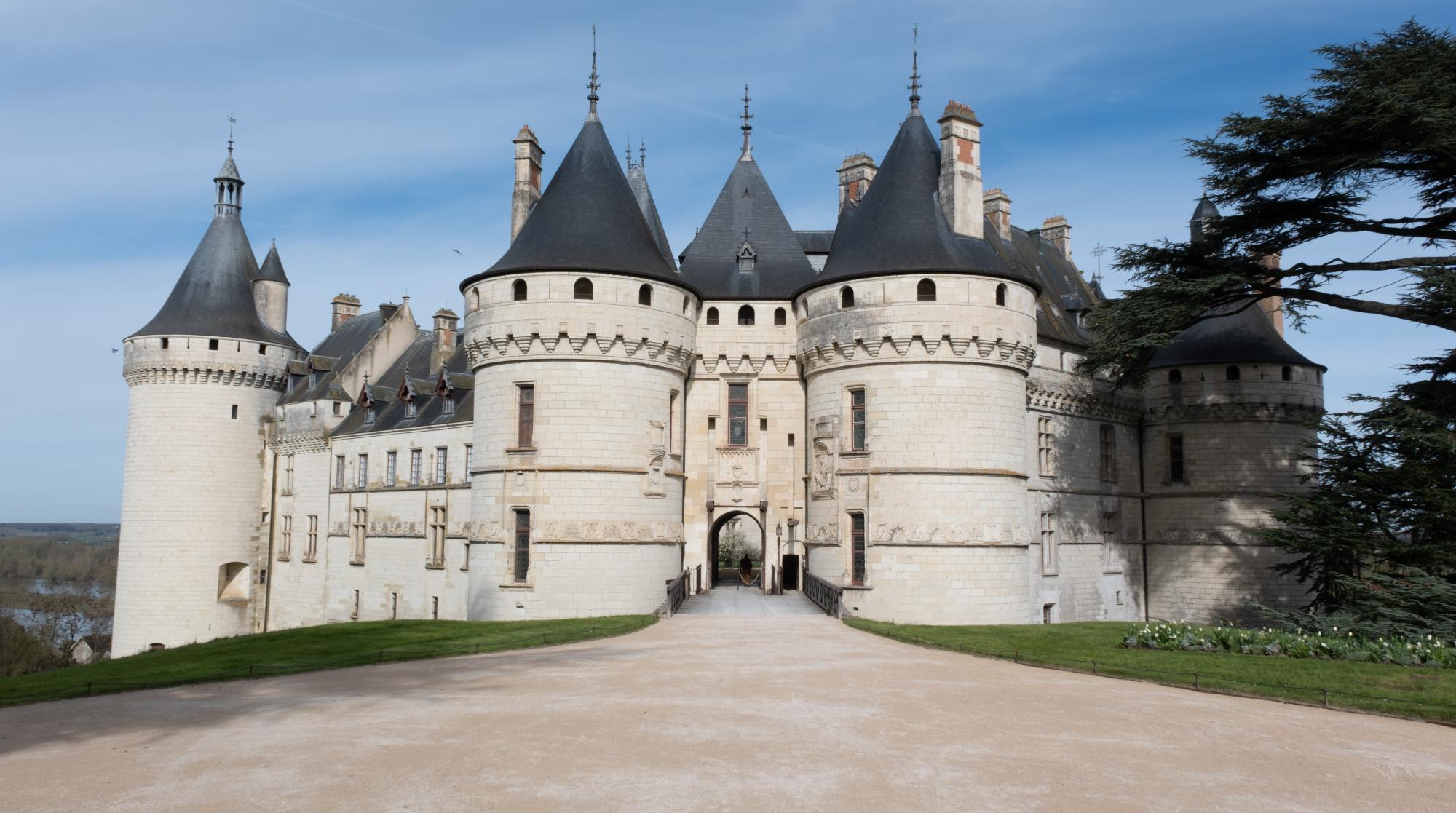
Storybook towers, watercolor reflections, and pure fairytale energy.
When you think of France, you probably picture croissants, cobblestone streets… and castles dripping in romance. But these aren’t just historical landmarks—they’re living works of art, tucked into the countryside like something out of a Monet or a Disney storyboard.
From mirror-still moats to turreted silhouettes against golden skies, these French châteaux are made to be seen—and yes, pinned. Ready to wander through a real-life painting? Let’s go.
🏰 1. Château de Chambord – Loire Valley
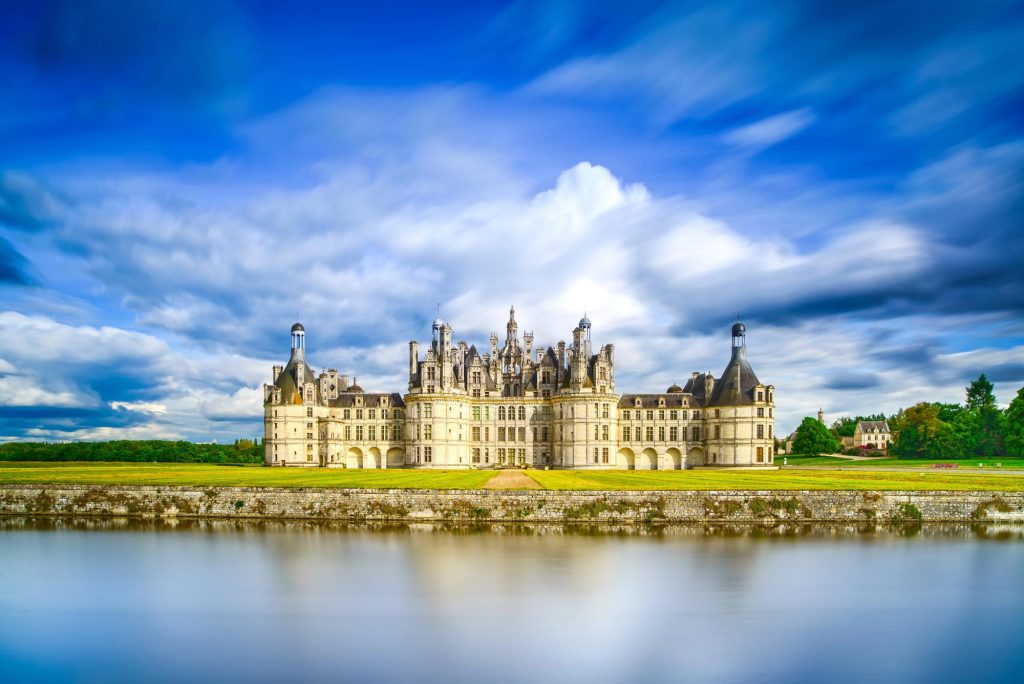
There’s dramatic—and then there’s Château de Chambord. Rising from the misty fields of the Loire Valley like something out of a fantasy novel, it’s the largest château in the region—and arguably the most surreal.
Built in the early 1500s as a royal hunting lodge (because why not?), it’s a bold blend of French medieval forms and Italian Renaissance flair. The highlight? A double-helix staircase at the center of the château—two people can walk up and down at the same time without ever crossing paths. It’s mind-bending, elegant, and rumored to be designed by Leonardo da Vinci himself.
The chimneys and turrets that line the rooftop look like an intricate skyline sculpture—each one different, each one deliberate. It’s as if an architect let their imagination run wild… and the result is pure poetry in stone.
✨ Why it’s painterly:
- The soft, creamy limestone picks up the warm pinks and oranges of the sunset, glowing like a Renaissance oil painting.
- The surrounding reflective moat mirrors the château perfectly, especially in still morning light or at golden hour.
- The symmetry and layered rooftop silhouettes give the entire building a dreamlike, fantastical quality.
📸 Pinterest Tip: Frame your shot from the far bank of the moat during golden hour—add wildflowers in the foreground for bonus magic.
🌸 2. Château de Chenonceau – Spanning the River Cher
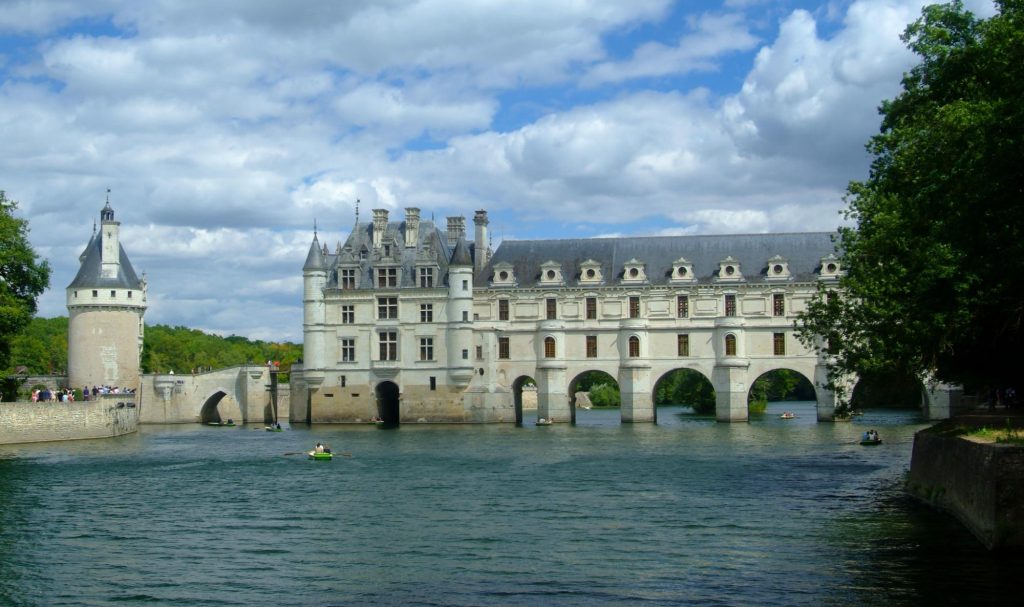
Step into a fairytale painted with petals and light—Château de Chenonceau isn’t just one of the most beautiful castles in France, it’s also one of the most unique.
Nicknamed “Le Château des Dames” (The Ladies’ Castle), Chenonceau owes its elegance and history not to kings, but to the visionary women who built, expanded, and protected it—from Diane de Poitiers, mistress of Henry II, to Catherine de’ Medici, his powerful queen. Their touch is everywhere—from the lush Renaissance gardens to the refined interiors and delicate architecture that spans the River Cher, arch by arch.
As you walk through the long gallery that floats over the water, light pours in from both sides, creating moving reflections on the stone floor. Outside, manicured gardens bloom with roses, lavender, and perfectly trimmed hedges—like something from a Romantic-era painting.
✨ Why it’s painterly:
- The graceful arches of the château mirror perfectly in the calm, glassy river—especially at golden hour.
- Seasonal flowers fill the scene with splashes of pinks, purples, and greens—Monet would approve.
- The way light dances through the arched windows of the bridge-gallery makes every room feel like a living watercolor.
📸 Pinterest Tip: Capture a wide shot from the left side of the river with garden blooms in the foreground—it’s the ultimate fairytale flat-lay.
🌲 3. Château de Pierrefonds – Medieval Meets Magic
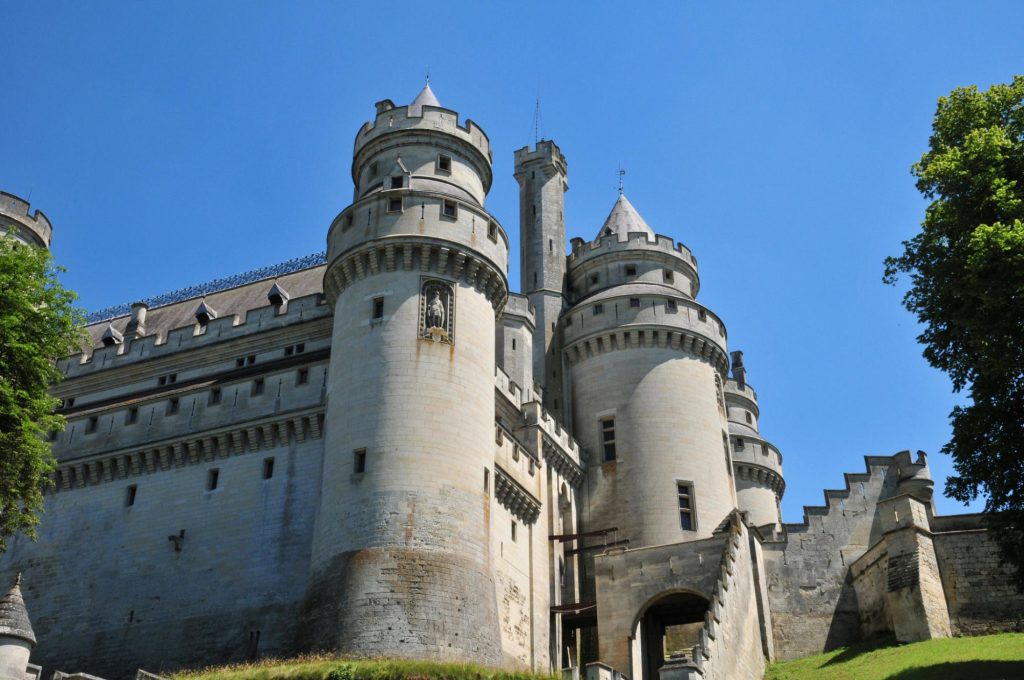
If you’ve ever dreamed of stepping into a medieval storybook, Château de Pierrefonds is the castle that lives in your imagination. Perched high on a hilltop and often veiled in morning mist, it has all the drama of a fantasy novel—drawbridges, moats, soaring towers, and enough atmosphere to film a period drama (which it has—BBC’s Merlin was shot here).
Originally built in the 14th century, Pierrefonds was left in ruins until Napoleon III ordered a grand restoration in the 19th century by architect Viollet-le-Duc. The result is a romantic vision of the Middle Ages, reimagined through a Gothic Revival lens—with vaulted ceilings, secret staircases, and armor-lined halls that are every bit as cinematic as they sound.
✨ Why it’s painterly:
- The dramatic gray stone towers rise above the treetops like a charcoal sketch come to life.
- Shadowed courtyards and arched corridors create strong contrasts of light and dark—perfect for moody, painterly photos.
- The surrounding Compiègne Forest adds a seasonal palette—green and gold in autumn, misty gray in winter, and lush in spring.
📸 Pinterest Tip: Snap it on a foggy morning or autumn afternoon for moody, dramatic vibes—perfect for dreamy pins with a dark academia twist.
🪞 4. Château de Fontainebleau – Classical Elegance
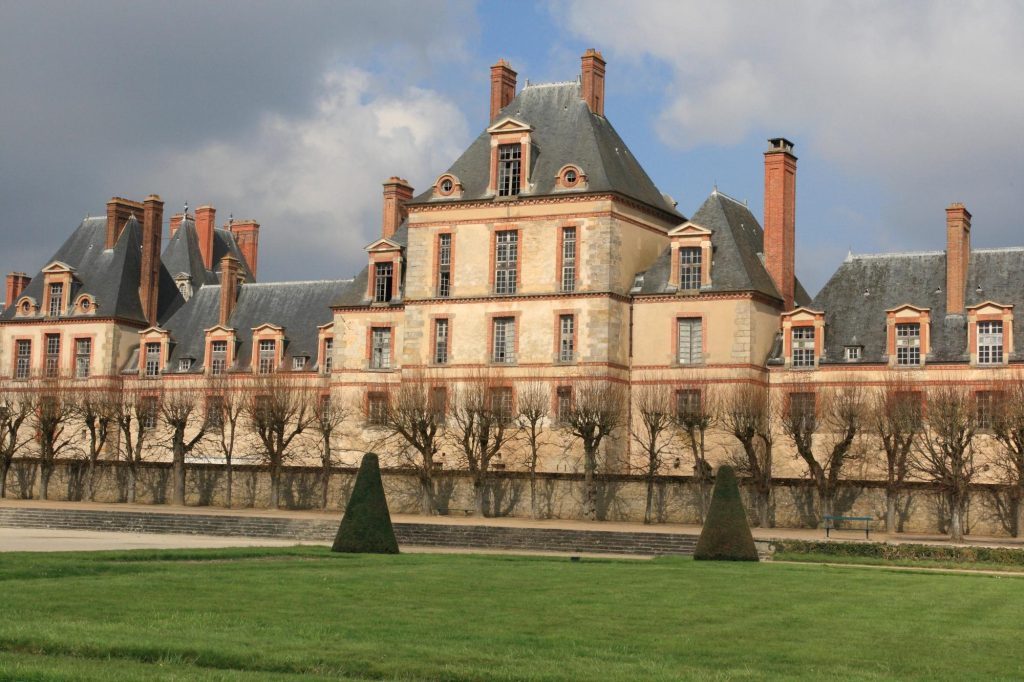
📍 Île-de-France
Often overlooked in favor of Versailles, Château de Fontainebleau is a quiet masterpiece—less crowded, just as grand, and arguably more soulful.
This UNESCO-listed château was a royal residence for eight centuries, housing kings, queens, emperors—and most famously, Napoleon Bonaparte, who called it “the true home of kings.” Walking through its vast halls is like flipping through pages of French history, layered with Renaissance art, Baroque splendor, and Neoclassical elegance.
Inside, you’ll find vaulted ceilings covered in frescoes, mirror-lined galleries, and gilded rooms decorated with tapestries and imperial symbols. Step outside, and you’re greeted with reflective lakes, sweeping staircases, and carefully structured gardens that feel like a set piece from a neoclassical painting.
✨ Why it’s painterly:
- The perfect symmetry of its architecture makes every angle feel composed and intentional—like a scene from an 18th-century landscape.
- Its frescoed ceilings and gold-trimmed interiors are bathed in soft, natural light—ideal for moody, elegant captures.
- The Carp Pond (Étang des Carpes) behind the château reflects the façades and trees like a mirror, especially beautiful in autumn or early morning.
📸 Pinterest Tip: Capture the reflection of the palace on the Étang des Carpes (Carp Pond) at sunrise. Total serenity.
🦢 5. Château de Chantilly – Romance + Reflection

If castles could dream, they’d probably picture themselves as Château de Chantilly. Nestled among glassy ponds, swan-filled moats, and endless green forest, it’s one of the most romantic and elegant châteaux in France—and it feels worlds away from the city.
Originally built in the Middle Ages and later redesigned in the 19th century, Chantilly is a perfect blend of art, nature, and aristocratic charm. Inside, it houses the Musée Condé, one of France’s most prestigious collections of paintings, rare books, and illuminated manuscripts—second only to the Louvre in richness and quality. Think Raphael, Poussin, and Delacroix in gold-trimmed galleries.
But it’s the exterior that feels truly surreal: the château is surrounded by water on all sides, its pale stone façades reflected so perfectly that it looks like it’s hovering just above the surface.
✨ Why it’s painterly:
- The mirror-like ponds surrounding the château create natural symmetry that mimics 19th-century romantic landscape paintings.
- Swans gliding across still water, trimmed hedges, and soft morning mist make every corner photogenic.
- The soft gray and cream tones of the building, contrasted with lush greens and sky blues, create a dreamy, de-saturated palette that’s pure magic on camera.
📸 Pinterest Tip: Shoot from the far side of the moat or from the gardens—frame with greenery or stone archways for that storybook effect.
🌿 6. Château de Hautefort – Dordogne Drama
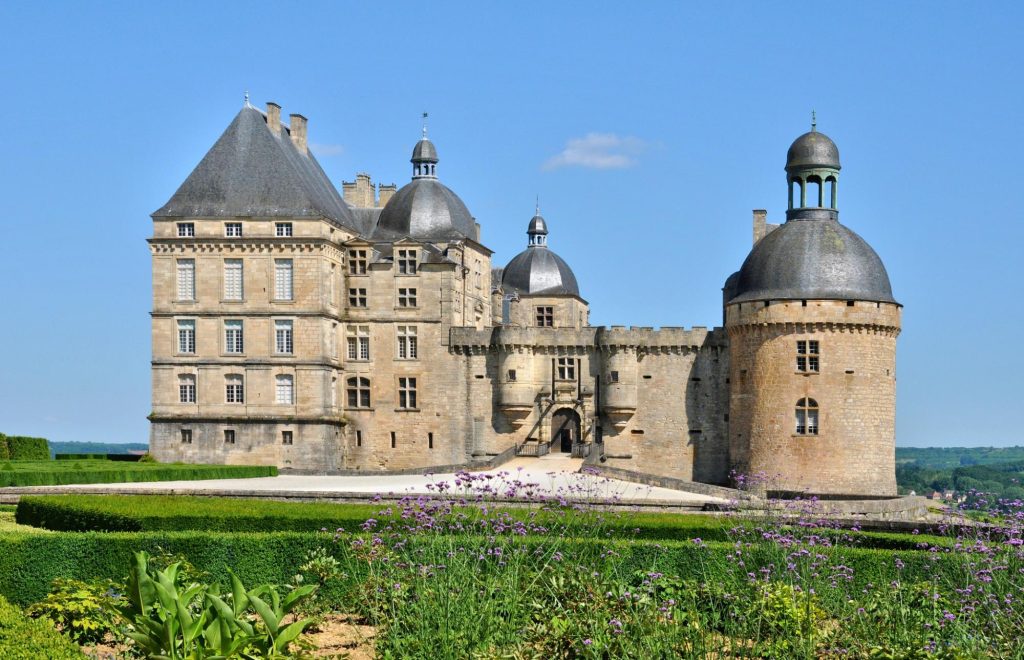
📍 Nouvelle-Aquitaine, Dordogne region Set atop a gentle hill overlooking fields, forests, and golden-hued villages, Château de Hautefort is the kind of place that feels lifted from an 18th-century landscape painting—and then brought to life in full color and birdsong.
This elegant Baroque château is less about medieval turrets and more about symmetry, refinement, and romance. Once a fortress, it was transformed in the 1600s into a noble residence that blends classical French architecture with Italian elegance. Its soft-stone walls and rounded towers make it feel both powerful and poetic.
But what truly sets Hautefort apart are its formal gardens, sculpted with mathematical precision. Think perfectly clipped box hedges, spiral topiaries, and sweeping lawns laid out like a royal tapestry. Behind it all, the panoramic views of the Dordogne countryside add that timeless, pastoral beauty you’d expect from a painting by Fragonard or Watteau.
✨ Why it’s painterly:
- The Baroque balance of architecture and landscape makes every angle feel composed—like a painting where every brushstroke is intentional.
- The gardens change with the seasons, giving a shifting color palette—spring blossoms, summer greens, and autumn golds.
- The château’s earth-toned stone and curved silhouettes contrast softly with the deep greens of the surrounding countryside.
📸 Pinterest Tip: Capture a symmetrical aerial view of the hedges, or shoot from behind the garden fountain toward the castle for balance and elegance.
🌊 7. Château de Mont-Saint-Michel – Where Fantasy Meets Reality
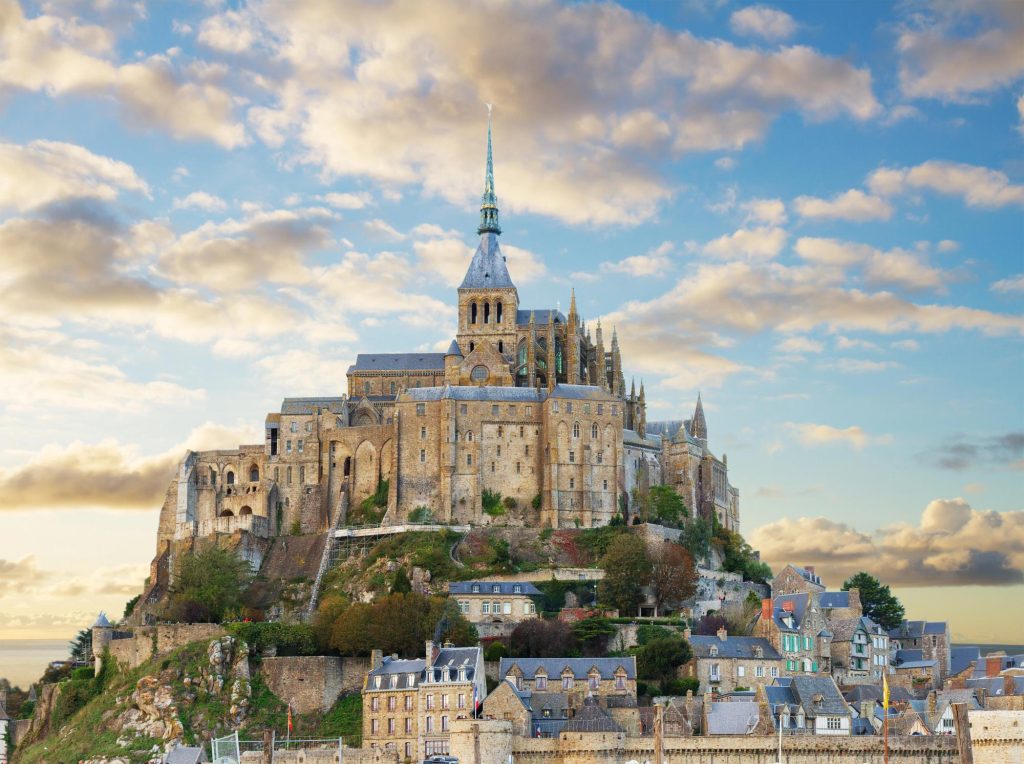
📍 Normandy Okay, so it’s not technically a château—but if you’re talking about jaw-dropping, painterly places in France, Mont-Saint-Michel deserves a standing ovation. Rising from the tidal flats off the Normandy coast like a medieval mirage, this rocky island crowned with a Gothic abbey is one of the most surreal sights in Europe.
Once only reachable at low tide, Mont-Saint-Michel was a place of pilgrimage, legend, and isolation for centuries. Its steep, winding streets, centuries-old stone houses, and gravity-defying abbey seem plucked from the pages of a fantasy novel—part Hogwarts, part cathedral, part castle in the clouds.
Depending on when you visit, you might see it shrouded in sea mist, surrounded by still waters that reflect the spires like a watercolor, or basking in golden sunset light with shadows stretching across the sand. The island transforms with the tide and the sky—no two moments are the same.
✨ Why it’s painterly:
- The drama of sky and sea meeting stone is something no filter can fully capture.
- Reflections in the shimmering tidal flats create mirror-like compositions—perfect for moody, atmospheric shots.
- The textures of slate roofs, stone walls, and narrow cobbled paths add old-world depth to every photo.
📸 Pinterest Tip: Photograph it from the causeway just before high tide for that famous “floating island” look. Go at sunrise or sunset for pastel skies.
🎨 Final Brushstroke
Whether you’re a castle chaser, a hopeless romantic, or just looking to fill your Pinterest board with jaw-dropping views—France’s châteaux deliver. These places aren’t just photogenic—they’re alive with art, architecture, and atmosphere that you can truly feel.
So pack your camera (and maybe a sketchbook), and step inside a world where history and fantasy blend like oil on canvas.
