
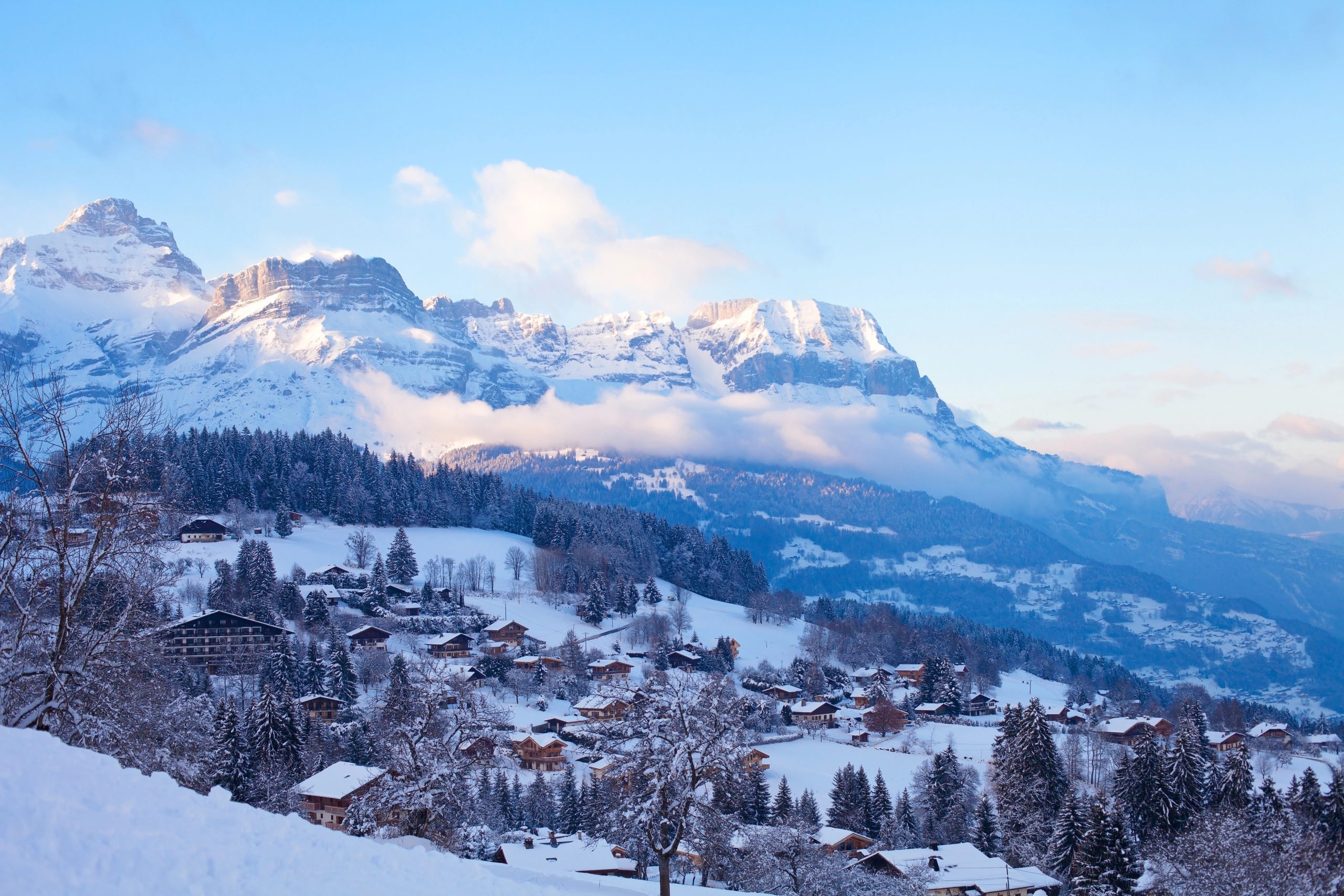
France has way more winter wonderlands than just Chamonix and Val d’Isère.
When people think “snow in France,” they picture the Alps — towering peaks, world-class ski resorts, and Instagram-perfect chalets.
But here’s what most travelers don’t know: France has multiple mountain ranges scattered across the country, each offering snow, skiing, and winter magic without the Alpine crowds and prices.
From volcanic peaks in central France to Pyrenean valleys on the Spanish border, from the rounded summits of the Vosges to Corsica’s unexpected ski slopes, France’s lesser-known snow destinations offer authentic mountain experiences, better value, and landscapes you won’t find in the Alps.
Here’s where to find snow in France when you want something different.
⛰️ The Pyrenees — Wild Mountains on the Spanish Border
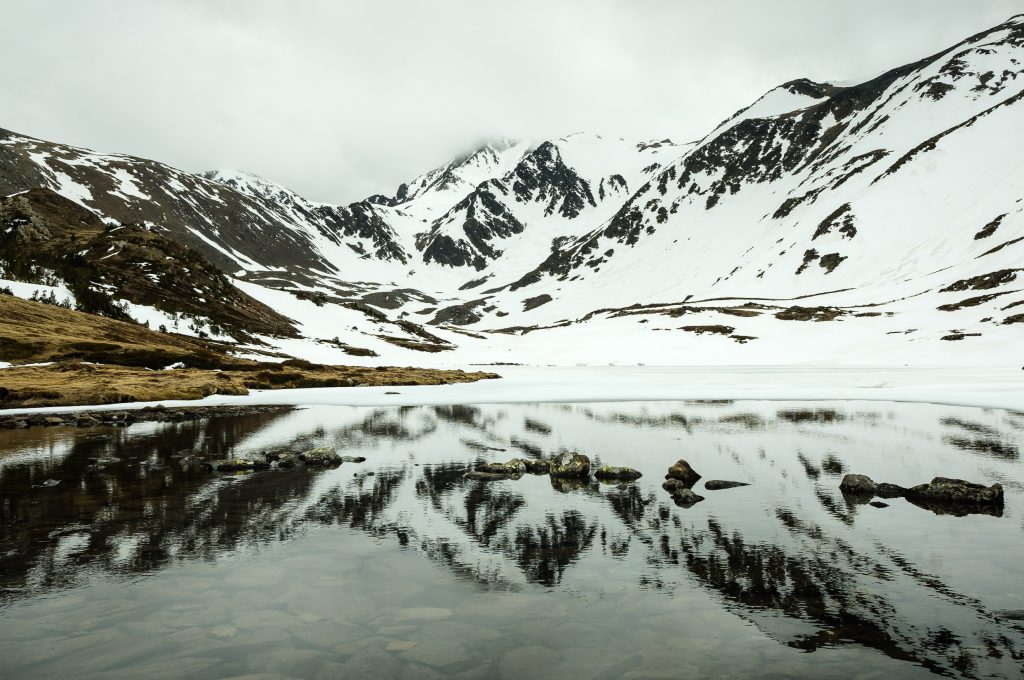
Where: Southern France, Atlantic to Mediterranean Highest peak: Pic du Midi de Bigorre (2,877m) Season: December–April
The Pyrenees are France’s second-highest mountain range — sharper peaks, deeper valleys, fewer tourists, and a unique blend of French, Basque, and Catalan cultures.
Best Ski Resorts
Font-Romeu (1,800–2,213m) is the largest Pyrenean resort with 43 slopes and 300+ days of sunshine annually. Perfect for families and sun-seekers.
Saint-Lary-Soulan (1,700–2,515m) offers three ski areas connected by cable car, plus thermal spas in the valley for perfect après-ski relaxation.
Cauterets (1,400–2,415m) is a Belle Époque spa town with beautiful architecture and gateway access to Pyrenees National Park.
Grand Tourmalet (1,400–2,500m) is the largest ski domain with 100km of slopes and access to Pic du Midi observatory.
Beyond Skiing
Take the cable car to Pic du Midi Observatory at 2,877m for panoramic views from Atlantic to Mediterranean. The stargazing sessions are unforgettable.
Cirque de Gavarnie is a UNESCO site with Europe’s highest waterfall (422m) that freezes into a spectacular ice column in winter.
Snowshoe through Pyrenees National Park to spot chamois, marmots, and possibly the rare Pyrenean brown bear.
Soak in thermal spas — many Pyrenean towns have natural hot springs with outdoor pools surrounded by snowy peaks.
Why Choose the Pyrenees
Costs: 30–40% cheaper than major Alpine resorts Crowds: Much quieter, even during French holidays Character: Authentic mountain villages, not purpose-built stations Access: Toulouse airport 1.5–2.5 hours away
🌋 Massif Central — Skiing on Extinct Volcanoes
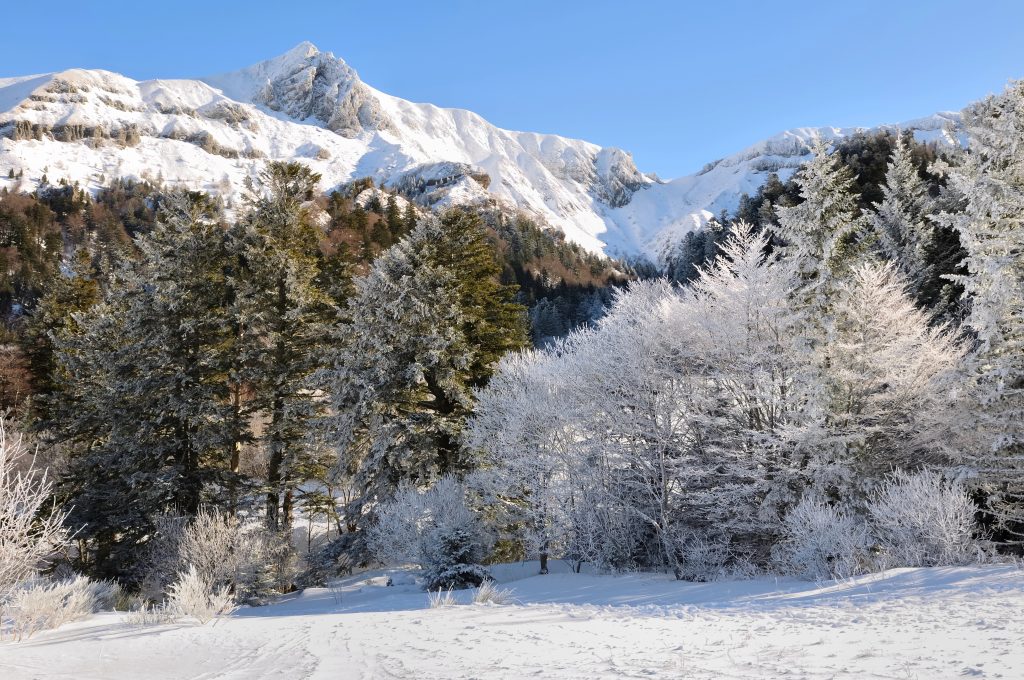
Where: Central France Highest peak: Puy de Sancy (1,886m) Season: December–March
The Massif Central is France’s volcanic heartland — extinct volcanoes, crater lakes, and rounded peaks covered in snow each winter. You’re literally skiing down ancient volcanoes.
Best Ski Areas
Super-Besse (1,350–1,850m) sits on Puy de Sancy volcano with 43km of slopes and stunning volcanic landscape views.
Le Mont-Dore (1,050–1,846m) is a charming Belle Époque spa town with access to Puy de Sancy summit and thermal baths.
Le Lioran (1,160–1,855m) offers 60km of slopes in an extinct volcano crater with modern facilities.
Beyond Skiing
Hike or cable car to Puy de Sancy summit for 360° views over the volcanic landscape.
Visit Lac Pavin, a perfectly circular crater lake formed 7,000 years ago, often frozen in winter.
Explore the cheese route — the Massif Central produces Saint-Nectaire, Cantal, and Bleu d’Auvergne. Visit farms and fromageries.
Discover medieval stone villages like Salers and Besse-et-Saint-Anastaise, unchanged for centuries.
Why Choose the Massif Central
Costs: Among France’s cheapest — lift tickets often under €30/day Unique: Ski on volcanoes with crater lakes Family-friendly: Gentle slopes, uncrowded, very affordable Access: Clermont-Ferrand airport/train 30–60 minutes away
🏔️ The Vosges — Alsace’s Fairytale Mountains
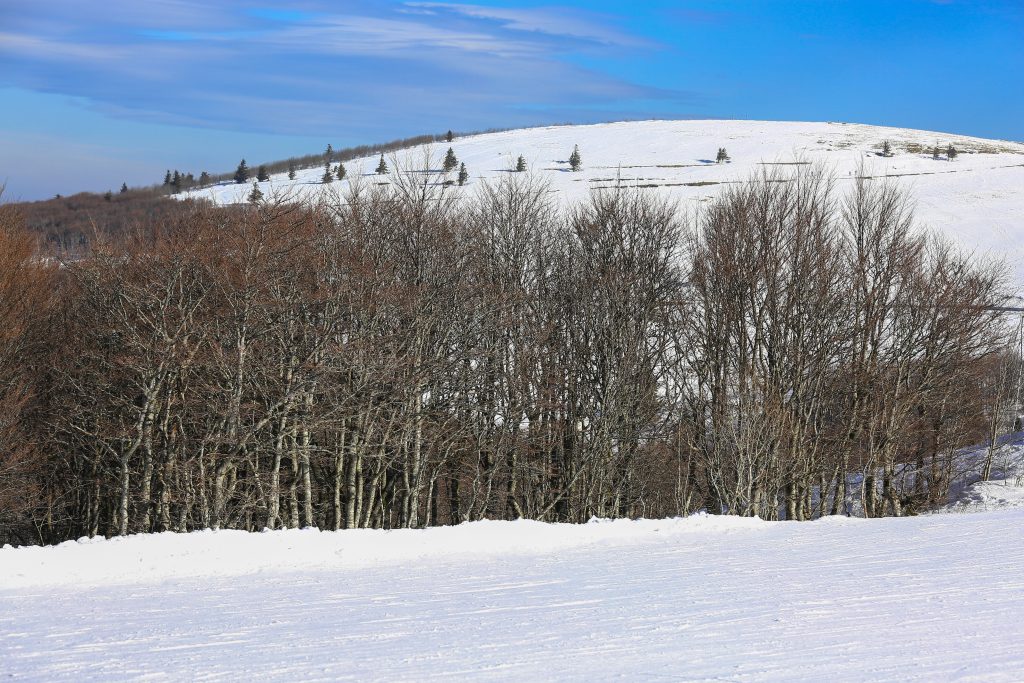
Where: Eastern France (Alsace/Lorraine) Highest peak: Grand Ballon (1,424m) Season: December–March
The Vosges are gentle, forested peaks perfect for cross-country skiing, snowshoeing, and family-friendly downhill. The forests look straight from a fairytale, and the villages are quintessentially Alsatian.
Best Ski Areas
La Bresse-Hohneck (900–1,350m) is the largest Vosges resort with 36 slopes and extensive night skiing.
Gérardmer (750–1,350m) is a beautiful lakeside town with alpine and Nordic skiing, plus ice skating on the frozen lake.
Le Markstein (1,100–1,265m) offers spectacular views over the Alsace plain with uncrowded slopes.
Cross-Country Paradise
The Vosges have over 1,000km of groomed cross-country trails — France’s premier Nordic destination.
Route des Crêtes offers spectacular ridge skiing with views over Alsace and Germany’s Black Forest.
Champ du Feu has 50km of Nordic trails through pristine forests.
Beyond Skiing
Explore snow-covered Alsatian villages like Riquewihr, Eguisheim, and Kaysersberg. Christmas markets run through December.
Visit farms on the Munster cheese route and pair tastings with local Gewürztraminer wine.
Relax in thermal spas after a day on the slopes.
Why Choose the Vosges
Costs: Very affordable — lift tickets €20–35/day Cross-country: Best Nordic skiing in France Culture: Combine skiing with Alsatian villages and cuisine Access: Strasbourg or Mulhouse 1–1.5 hours away
🏔️ The Jura — Switzerland’s Quieter Neighbor
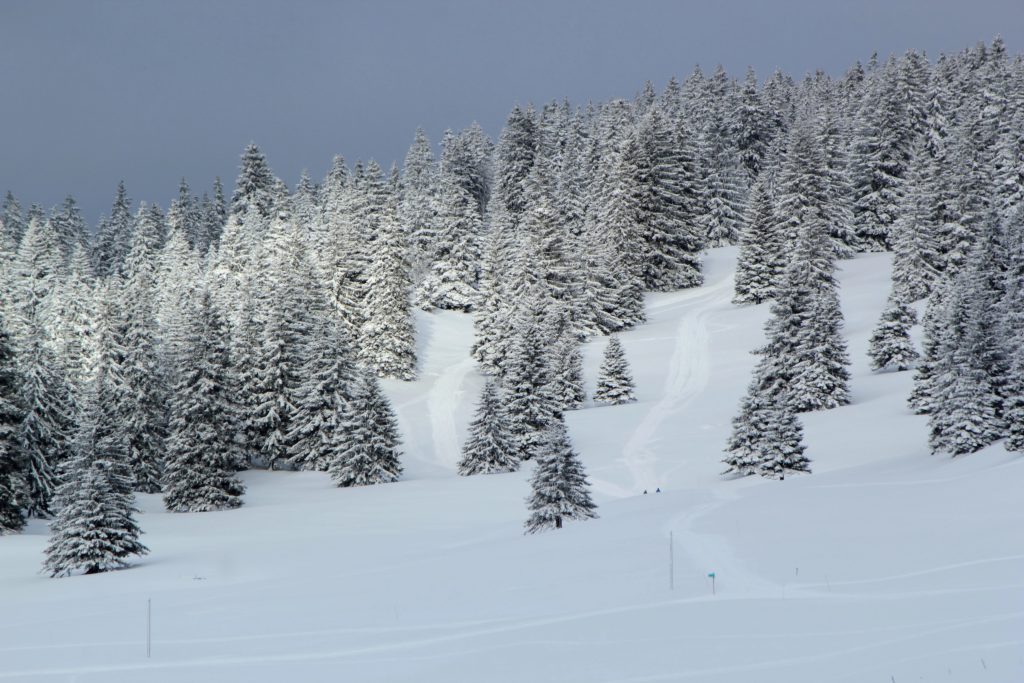
Where: Eastern France, bordering Switzerland Highest peak: Crêt de la Neige (1,720m) Season: December–March
The Jura Mountains are France’s best-kept winter secret — rolling forested mountains perfect for cross-country skiing, snowshoeing, and gentle downhill. This is where French families go for affordable, low-key winter vacations.
Best Ski Areas
Les Rousses (1,100–1,680m) is the largest Jura resort with 50km of alpine slopes and 200km of cross-country trails.
Métabief (900–1,463m) offers good alpine variety with views over Lake Geneva and the Alps.
Monts Jura (1,000–1,680m) overlooks Lake Geneva with a mix of French and Swiss skiers.
Cross-Country Heaven
The Jura is France’s birthplace of cross-country skiing with over 3,000km of groomed trails.
GTJ (Grande Traversée du Jura) is a 180km cross-country route traversing the entire range. Do sections as day trips or the full multi-day journey.
Beyond Skiing
Follow the Comté cheese route to visit fromageries and see aging caves for one of France’s greatest cheeses.
Taste unique Jura wines including Vin Jaune (yellow wine) aged for years in barrels. Visit wineries in Arbois.
Try ice climbing on frozen waterfalls like Cascade des Tufs.
Why Choose the Jura
Costs: Very affordable — lift tickets €25–40/day Cross-country: 3,000km of Nordic trails Food & wine: Comté cheese and unique Jura wines Access: Geneva airport 1 hour, Lyon 2 hours
🏔️ Corsica — The Mediterranean Island with Ski Slopes
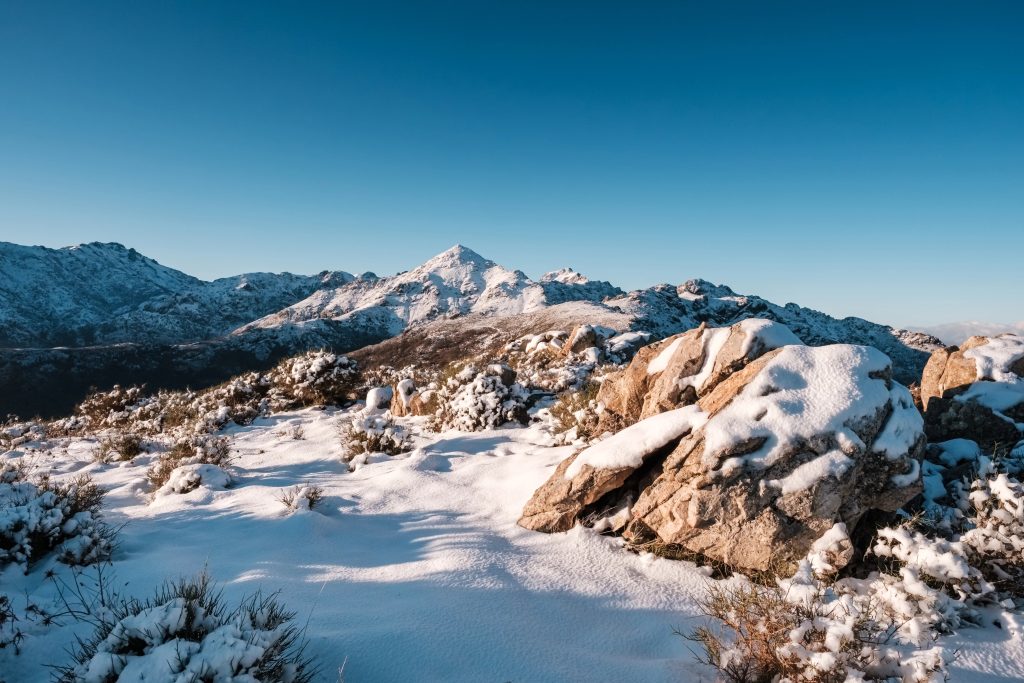
Where: Mediterranean island Highest peak: Monte Cinto (2,706m) Season: January–March
Yes, Corsica has ski resorts. This Mediterranean island is actually a mountain range rising from the sea with peaks over 2,700m that get significant snowfall each winter.
Ski Stations
Val d’Ese (Bastelica) (1,600–1,900m) is Corsica’s main station with 16 slopes and views over the Mediterranean.
Ghisoni (Capanelle) (1,600–1,800m) is a small resort in beautiful forest setting, very uncrowded.
Beyond Skiing
Explore mountain villages like Corte, Corsica’s historic capital, surrounded by snowy peaks.
Enjoy hearty Corsican mountain cuisine — wild boar stew, chestnut polenta, local charcuterie.
Drive to the coast (1–2 hours) for dramatic contrast between snowy mountains and Mediterranean beaches.
Why Choose Corsica
Unique: Ski on a Mediterranean island Culture: Fierce Corsican mountain traditions Contrast: Mountains and beaches in one day Note: Short season (January–March), variable snow — call ahead
❄️ Beyond Skiing — Other Snow Activities
Snowshoeing
Access pristine landscapes in all mountain regions. Guided trips often include wildlife spotting or sunset tours. Best regions: Vosges, Jura, Pyrenees National Park.
Cross-Country Skiing
Full-body workout with access to beautiful landscapes. Best regions: Jura (3,000km trails), Vosges (1,000km), Pyrenees.
Dog Sledding
Half-day or multi-day trips available in Pyrenees, Vosges, Jura, and Massif Central. Learn to mush your own team.
Thermal Spas
Perfect après-ski relaxation. Pyrenees: Cauterets, Saint-Lary. Massif Central: Le Mont-Dore. Vosges: Plombières-les-Bains.
💰 Cost Comparison
Lift Tickets (Adult Day Pass):
- Alps: €55–70
- Pyrenees: €35–45
- Massif Central: €25–35
- Vosges: €20–35
- Jura: €25–40
Overall Daily Budget:
- Alps: €150–300 per person
- Other ranges: €80–150 per person
- Savings: 40–50% compared to major Alpine resorts
🗺️ Which Mountain Range for You?
Best for families: Massif Central (affordable, gentle slopes, unique volcanoes)
Best for cross-country: Jura (3,000km of trails)
Best for dramatic scenery: Pyrenees (wild peaks, national park)
Best for culture: Vosges (Alsatian villages, Christmas markets)
Best for unique experience: Corsica (Mediterranean island skiing)
Best value: Massif Central (cheapest overall)
Best snow reliability: Pyrenees (higher altitude)
The Bottom Line
France’s non-Alpine mountains offer something the Alps often don’t: authenticity, affordability, and space to breathe.
You won’t find the highest peaks or longest runs. But you’ll find real mountain villages where locals outnumber tourists, ski slopes without lift queues, and landscapes that feel genuinely wild.
You’ll pay half what you’d spend in the Alps. You’ll eat better food in family-run restaurants. And you’ll have experiences — skiing on a volcano, crossing the Spanish border on skis, soaking in thermal springs under snowy peaks — that you simply can’t have in Chamonix.
The Alps are magnificent. But France’s other mountains are where you’ll find the soul of French mountain culture.
Ready to discover France’s secret snow? These mountains are waiting — and they’re more magical than you imagine.
