
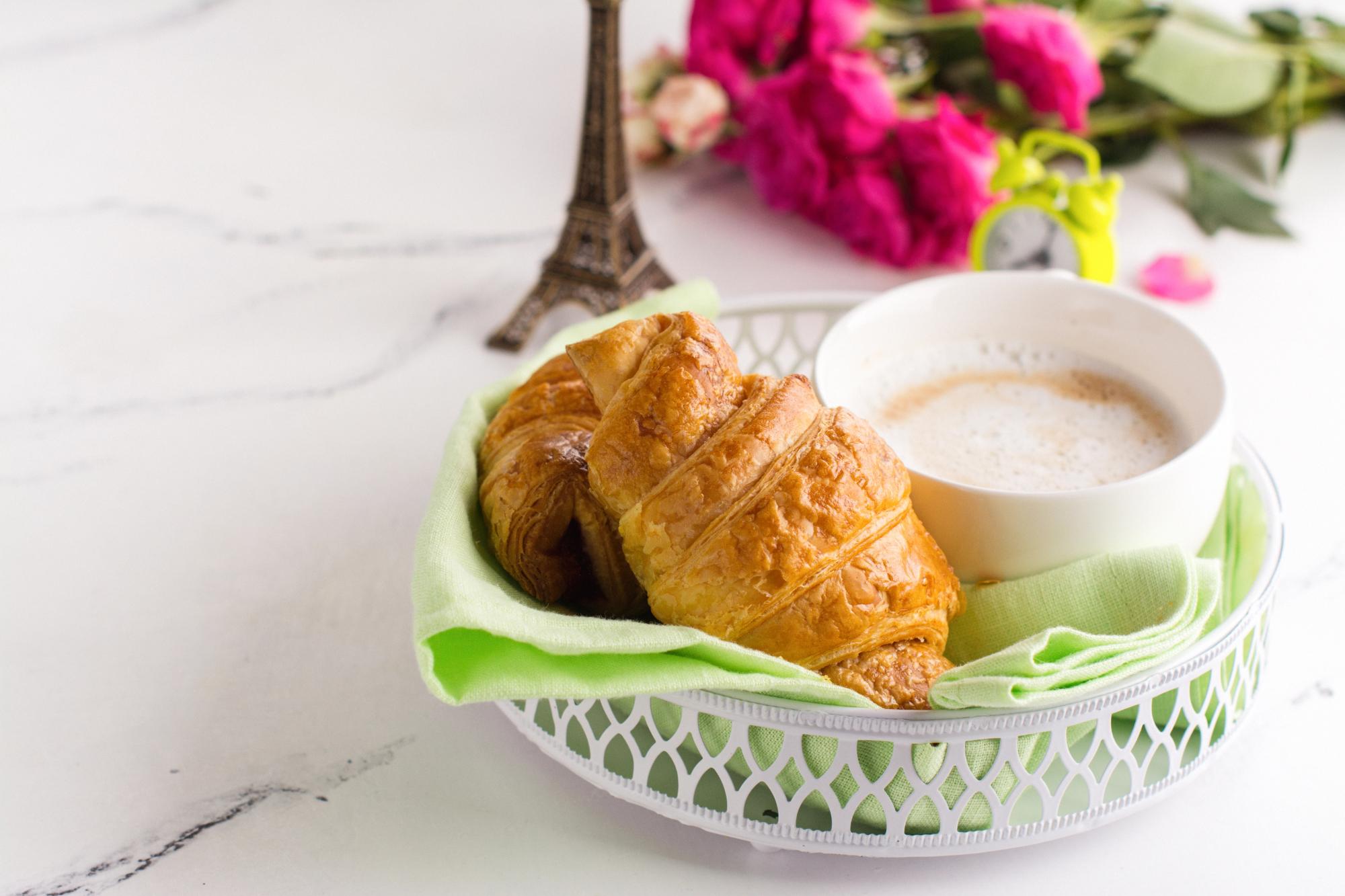
Forget eggs, bacon, and bottomless coffee refills—French breakfasts are lighter, simpler, and way more elegant. It’s less about protein and more about pleasure: flaky pastries, good butter, and just enough caffeine to start the day with a je ne sais quoi.
Here’s what you’ll actually find on a French breakfast table (no stereotypes—just reality).
🥖 1. Fresh Baguette with Butter & Jam
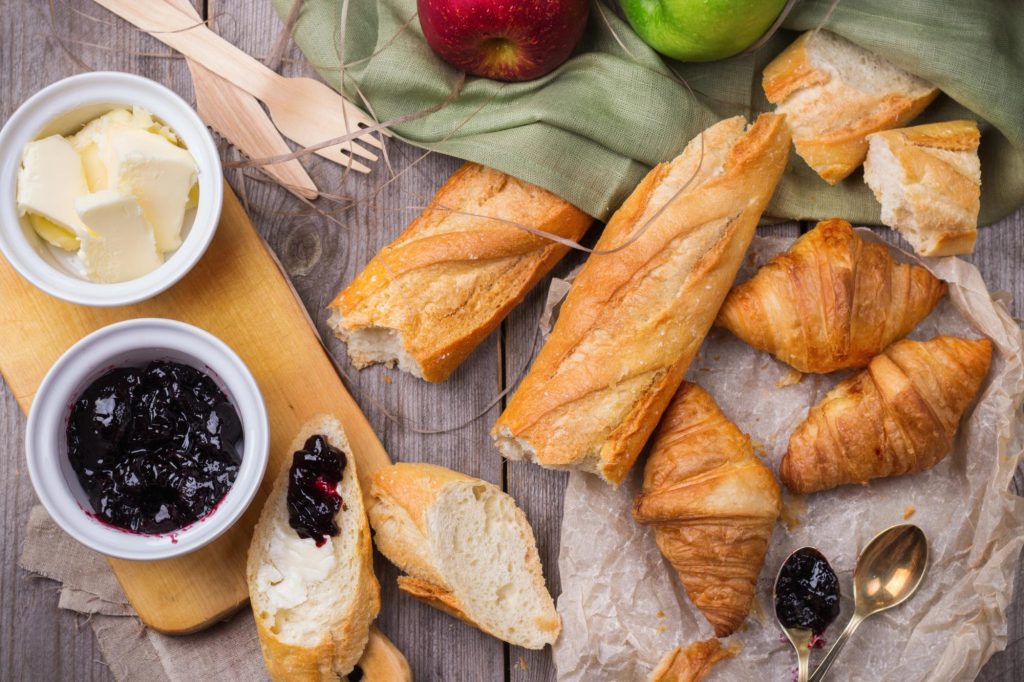
The real MVP of French breakfasts isn’t flashy—it’s humble, warm, and utterly comforting. A slice of day-old baguette, lightly toasted or warmed in the oven, becomes a “tartine” when spread with salted butter and topped with fruit jam like apricot, cherry, or raspberry.
No toaster? No stress. In France, most people simply warm their bread in the oven or even toast it directly on a hot skillet. The slightly crisp edges, soft center, and contrast of melty butter with sweet jam make this one of the most satisfying morning rituals.
🧈 The butter matters: The French typically use cultured, salted butter—often from Brittany—which adds richness and depth that takes the tartine from basic to irresistible. 🍑 The jam? Often homemade or bought from trusted brands like Bonne Maman, with whole fruit pieces and no artificial sweetness.
✨ Why it works:
- It’s simple but indulgent, with just three ingredients.
- It’s quick to prepare, especially on busy weekday mornings.
- It’s a quiet little luxury—soft bread, rich butter, bright fruit—every bite feels like home.
📸 Pinterest Tip: Style your tartine on a linen napkin or wooden board, with a small ceramic cup of coffee beside it. Add a butter knife mid-spread, jam jar off to the side, and gentle morning light filtering in from a window. Bonus: crop it slightly off-center for a natural, editorial look.
🥐 2. A Pastry from the Boulangerie (on weekends or special days)
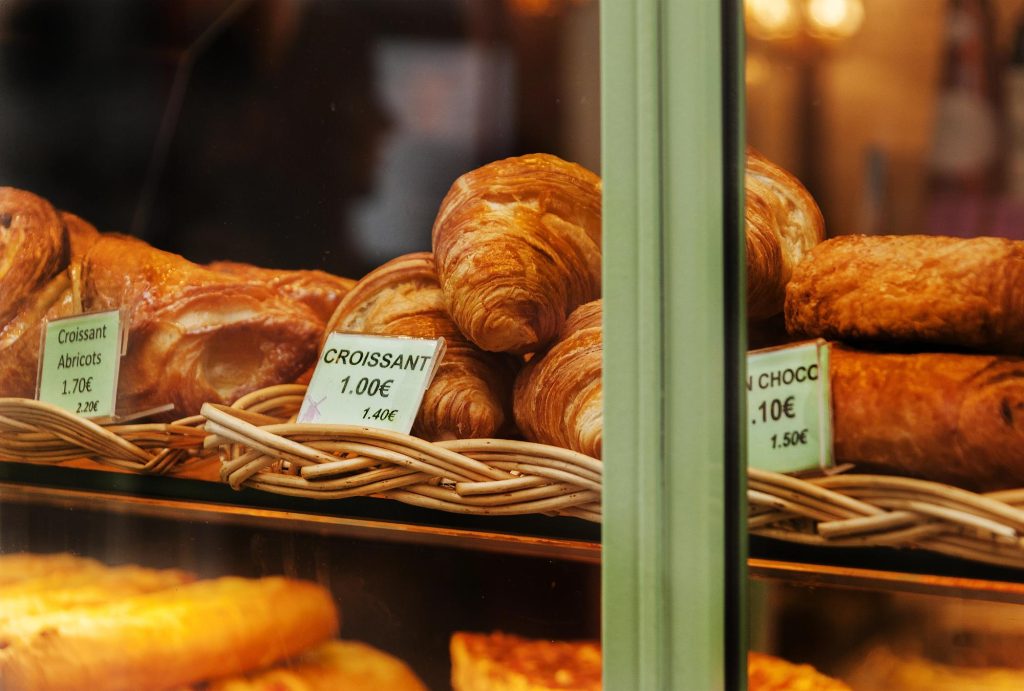
Let’s clear something up: French people don’t eat croissants every day. In fact, the idea of grabbing a buttery pastry every morning is more fantasy than fact. But on weekends, or for a special pause, the French do indulge—fresh from the local boulangerie, never from a supermarket box.
It’s a treat-yourself ritual: walking to your neighborhood bakery, breathing in that warm, yeasty aroma, and choosing just the right pastry for your mood.
Here are the classics you’ll spot in most bakery windows:
- 🥐 Croissant au beurre – Flaky, golden, and made with real butter (always choose this over the margarine version). The OG French pastry.
- 🍫 Pain au chocolat – Similar dough to the croissant, but folded around two rich bars of dark chocolate. Soft inside, crisp outside.
- 🍎 Chausson aux pommes – A puff pastry turnover filled with lightly sweetened apple compote. Like a French take on a hand pie.
✨ Pro tip: Want that perfectly golden, flaky bite? Ask for “un croissant bien cuit” (well baked). It’ll be slightly more caramelized—extra crispy on the outside and rich with butter inside. Parisians in-the-know always ask.
📸 Pinterest Tip: Place your pastry (or two!) on a simple ceramic plate, with scattered crumbs and a small silver coffee spoon beside it. Use a café tabletop—marble or wood—and include part of a book, sunglasses, or even your hand reaching in to make the shot feel candid and lived-in.
☕ 3. Café au Lait or Espresso
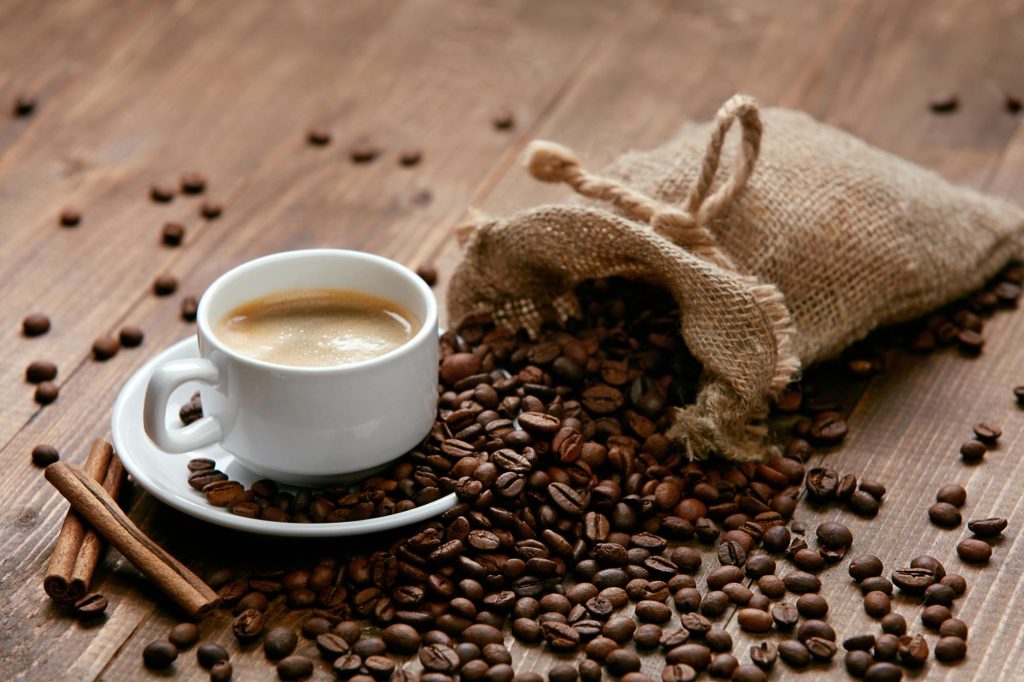
Forget grande lattes and venti to-go cups—the French approach to coffee is minimalist, intense, and ritualistic. Whether at home or in a bustling café, coffee in France is all about quality over quantity.
🏡 At home:
Most people start the day with a café au lait—a smooth blend of coffee and warm milk, typically served in a wide ceramic bowl, not a mug. There’s no rushing—just dipping your tartine into the bowl and savoring the moment. It’s comfort in liquid form.
☕ At cafés:
When outside, the orders shift to bolder, shorter formats:
- Espresso – the French default; just say “un café.” It’s tiny, intense, and served hot with a sugar cube.
- Café crème – espresso with steamed milk and foam; similar to a small latte.
- Noisette – espresso with a splash of milk (“hazelnut” in name, not flavor), perfectly balanced for a midday boost.
✨ No venti sizes here: You’ll rarely see takeout cups, and coffee isn’t meant to be guzzled on the go. It’s savored slowly—ideally while people-watching on a terrace.
📸 Pinterest Tip: Go for a top-down flat lay: a demitasse cup (tiny espresso cup) next to a half-eaten tartine, maybe an open notebook or a linen napkin peeking into frame. Bonus points for natural light and café tile floors in the background.
🥣 4. Yogurt or Fromage Blanc
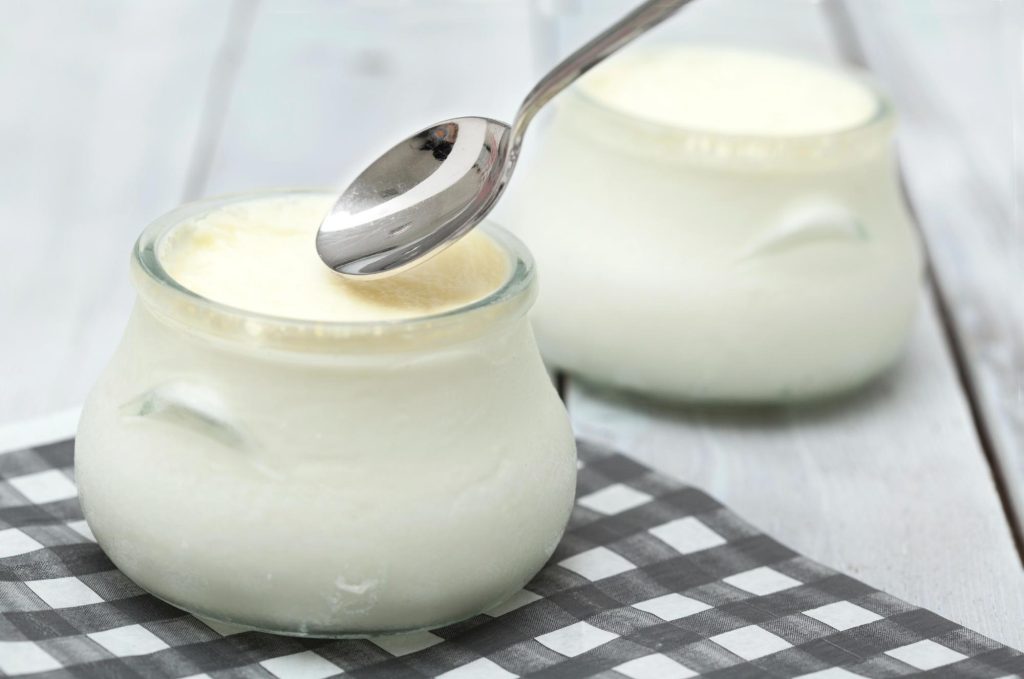
Not every French morning starts with a baguette. For something a little lighter—but still deeply satisfying—many French people reach for a glass jar of yogurt or fromage blanc, a velvety, tangy dairy staple that falls somewhere between Greek yogurt and whipped cream.
Unlike American yogurt cups packed with sugary mix-ins and crunchy toppings, the French keep it simple and elegant:
- A drizzle of local honey
- A spoonful of fruit jam or compote
- Maybe a few sliced figs or walnuts in autumn
✨ Fromage blanc vs. yogurt?
- Fromage blanc is thicker, smoother, and less sour than typical plain yogurt.
- Often sold in ceramic or glass jars (think La Fermière or Bonne Maman), which are so charming, you’ll want to keep them for repurposing as tiny flower vases or salt cellars.
🧠 How the French eat it: Usually at the table, unhurried, with a proper spoon—sometimes accompanied by a piece of fruit or a small espresso. No granola mountains, no towering parfaits—just clean, creamy satisfaction.
📸 Pinterest Tip: Spoon a swirl of golden honey over the top, place the jar on a linen napkin, and add a silver spoon and rustic tray or wood table underneath. Bonus: use soft morning window light and blur the background to get that cozy slow Paris morning aesthetic.
🍊 5. Fresh Juice or Seasonal Fruit
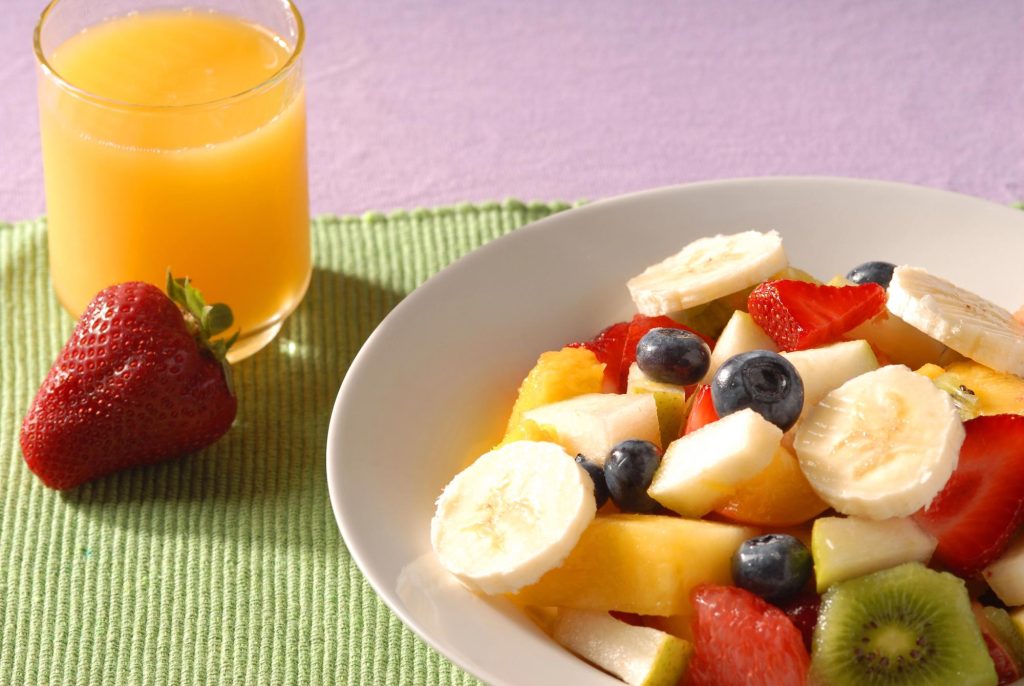
While French breakfasts are often light and carb-forward, there’s usually a small dose of fruit or juice to brighten the plate. But don’t expect towering fruit bowls or smoothie jars—this is simple, seasonal, and subtle.
🍹 Juice:
A petite glass of freshly squeezed orange juice—just a few ounces—is common, especially in cafés. It’s not gulped down, but sipped slowly alongside a tartine or pastry. You won’t find green juice or celery shots here. Smoothies? Rare. Protein shakes? Practically unheard of.
🍎 Fruit:
Think of it as a finishing touch:
- A peeled clementine in winter
- A juicy apricot or peach in summer
- A few slices of fig, apple, or pear in fall
Always eaten as-is, with minimal prep—just pure, seasonal flavor.
✨ Why it’s French: The French approach to breakfast is rooted in pleasure and moderation, not macros. It’s less about fuel, more about flavor, ritual, and enjoying the moment—even if that moment is only 10 minutes long.
📸 Pinterest Tip: Place a peeled clementine or sliced fig next to a crumpled linen napkin, a ceramic coffee cup, and a slice of baguette or yogurt jar. Use soft, natural light and aim for that effortlessly undone look—warm, rustic, and real.
🥐 So… No Eggs & Bacon?
Not really. Traditional French breakfasts are light and carb-based. Eggs are saved for lunch or brunch on weekends. You might spot soft-boiled eggs (œufs à la coque) with “soldiers” (strips of bread) in some households—but it’s the exception, not the rule.
✨ Modern twist: Younger Parisians might grab avocado toast or a chia bowl at a hip coffee shop—but that’s still far from the average home breakfast.
🧺 What a Typical French Breakfast Looks Like:
Here’s how to recreate it at home:
- A few slices of warm baguette
- French butter + good jam
- Small black coffee or café au lait
- A pot of plain yogurt
- A few slices of fruit
✨ Minimal effort. Maximum elegance.
📸 Pinterest Pin Idea: Lay it all out on a wooden table with a linen runner, open book, and dried flowers for the ultimate French morning aesthetic.
