
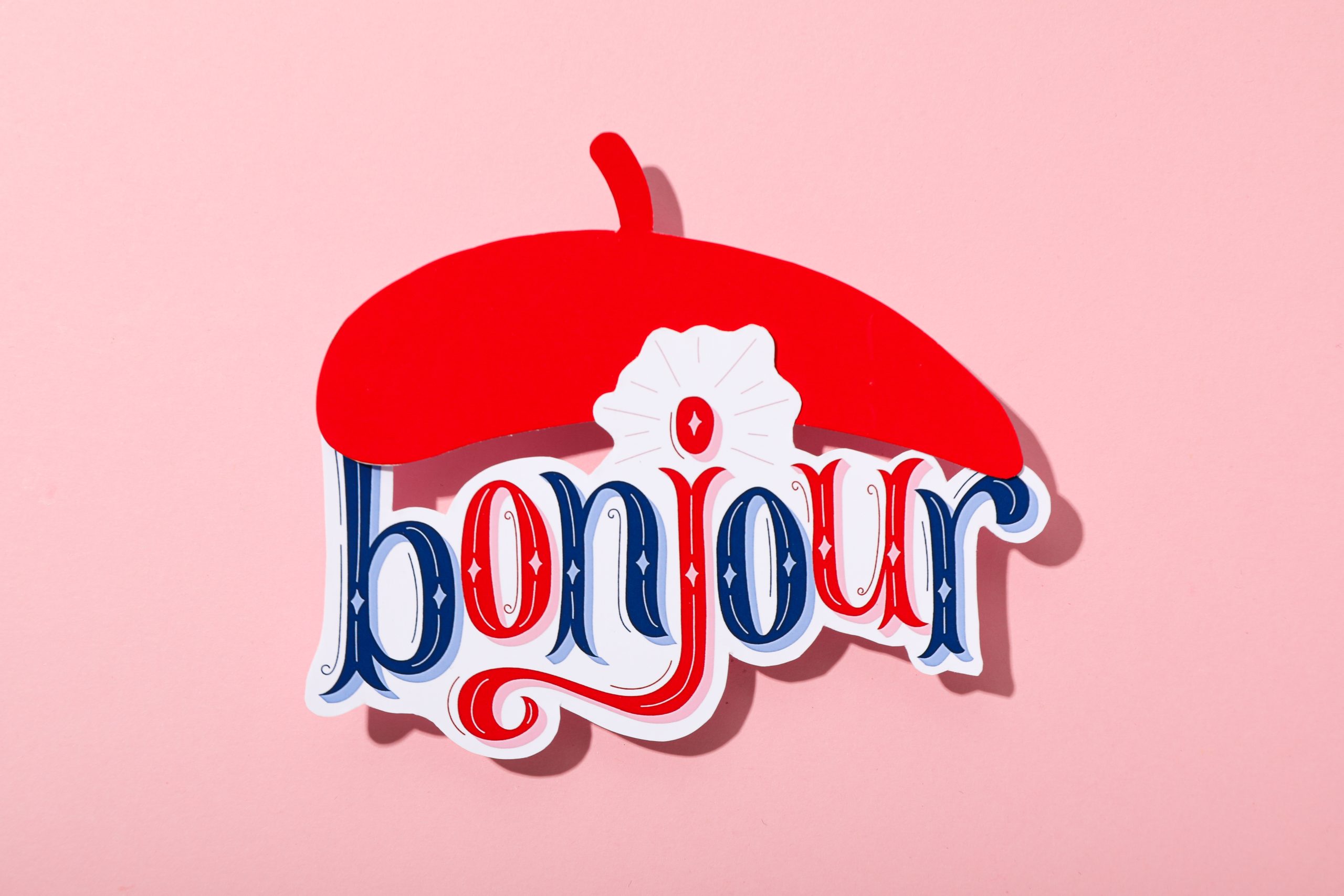
It’s more than a greeting — it’s the key to navigating French culture.
If you’re traveling to France, you might think “bonjour” simply means “hello.” But in France, bonjour is much more than a word — it’s a cultural ritual, a sign of respect, and the difference between a warm welcome and a cold stare.
Mastering when to say it (and when not to) will instantly make your interactions smoother, friendlier, and way more “local.”
Here’s what “bonjour” really means — and how to use it like the French do.
👋 So… What Does “Bonjour” Actually Mean?

Yes, it means hello — but the deeper meaning is:
✔️ I acknowledge you.
✔️ I respect the social space.
✔️ I’m entering this interaction politely.
In France, it’s socially expected to greet someone before asking for anything, saying a question, or even making eye contact for too long.
It’s a tiny word, but a big cultural signal.
🇫🇷 When You MUST Say “Bonjour”
If in doubt, say it. Truly.
Here are the moments when every French person expects it:
1. When you enter any shop
Bakery, pharmacy, boutique, grocery store — doesn’t matter. Always say “Bonjour” to the staff as soon as you walk in.
2. When you speak to any worker
Cashiers, waiters, receptionists, metro staff, bus drivers.
3. When you begin any conversation with a stranger
Asking directions, ordering food, even asking for the time.
4. When entering small shared spaces
A doctor’s office waiting room, an elevator, a tiny café.
This rule is so strong that skipping “bonjour” is considered rude, even if you’re polite afterward.
🌙 When to Say “Bonsoir” Instead

The switch usually happens around 6–7 PM, or whenever it “feels” like evening.
Use bonsoir when:
- stores are lit up
- people are heading to dinner
- it’s dark or close to dark
Saying bonjour at 10 PM is… not technically wrong, but it will sound off.
🚫 When NOT to Say “Bonjour”
Here’s where things get interesting — and where tourists often make mistakes.
1. Don’t repeat “bonjour” to the same person
If you already greeted the waiter once, you don’t say it again when they come back for your order. You only greet once per interaction.
2. Don’t use “bonjour” on the phone after the conversation has already started
If they answer with “Allô?” → You reply “Bonjour,” then never again.
3. Don’t say “bonjour” after asking a question
Avoid: ❌ “Excuse me, where is the metro — bonjour?” This feels backwards and abrupt.
Say it first, always.
4. Don’t use “bonjour” late at night
After about 10 PM, switch to:
- Bonsoir
or - Salut (informal)
or simply - Bonne soirée (when leaving)
5. Don’t mix “bonjour” and “bonsoir” with the same person
Pick one depending on the time of day and stick to it.
💬 Bonus: When You Can Say “Salut” Instead
Use salut only in casual settings:
✔️ friends ✔️ young people ✔️ social gatherings ✔️ someone you’ve already met
Never use salut with store staff, hotel workers, or strangers. It’s the equivalent of saying “hey” to someone you should call “sir” or “ma’am.”
🎯 The Golden Rule of French Greetings
Say “bonjour” early. Say it once. Say it to everyone.
If you get this right, everything else — service, politeness, friendliness — becomes easier in France.
